Top Cutting Disc Suppliers Compared: A Technical Guide to CNDOME's 1.5–16 Inch Specs
Cutting disc buyers rarely get to compare suppliers on the six parameters that decide whether a wheel fits the job: diameter, thickness, bore, shape code, grain and bond, and maximum operating speed. This guide compares three suppliers on exactly those parameters, using CNDOME’s published 1.5–16 inch program as the reference range, and includes a spec-level comparison table rated on size coverage, material options, speed and RPM ratings, shape variety, and industry application match.
A cutting disc — also written cutting wheel, cut-off wheel, or abrasive wheel — is a bonded abrasive consumable mounted on an angle grinder, cut-off machine, or straight grinder. Because it is a consumable, purchasing decisions often collapse into price per piece and the one diameter that fits the tool on the bench. The parameters that determine cut quality, heat, burr formation, and safe operation are usually compressed into a single catalog line, or left out entirely.
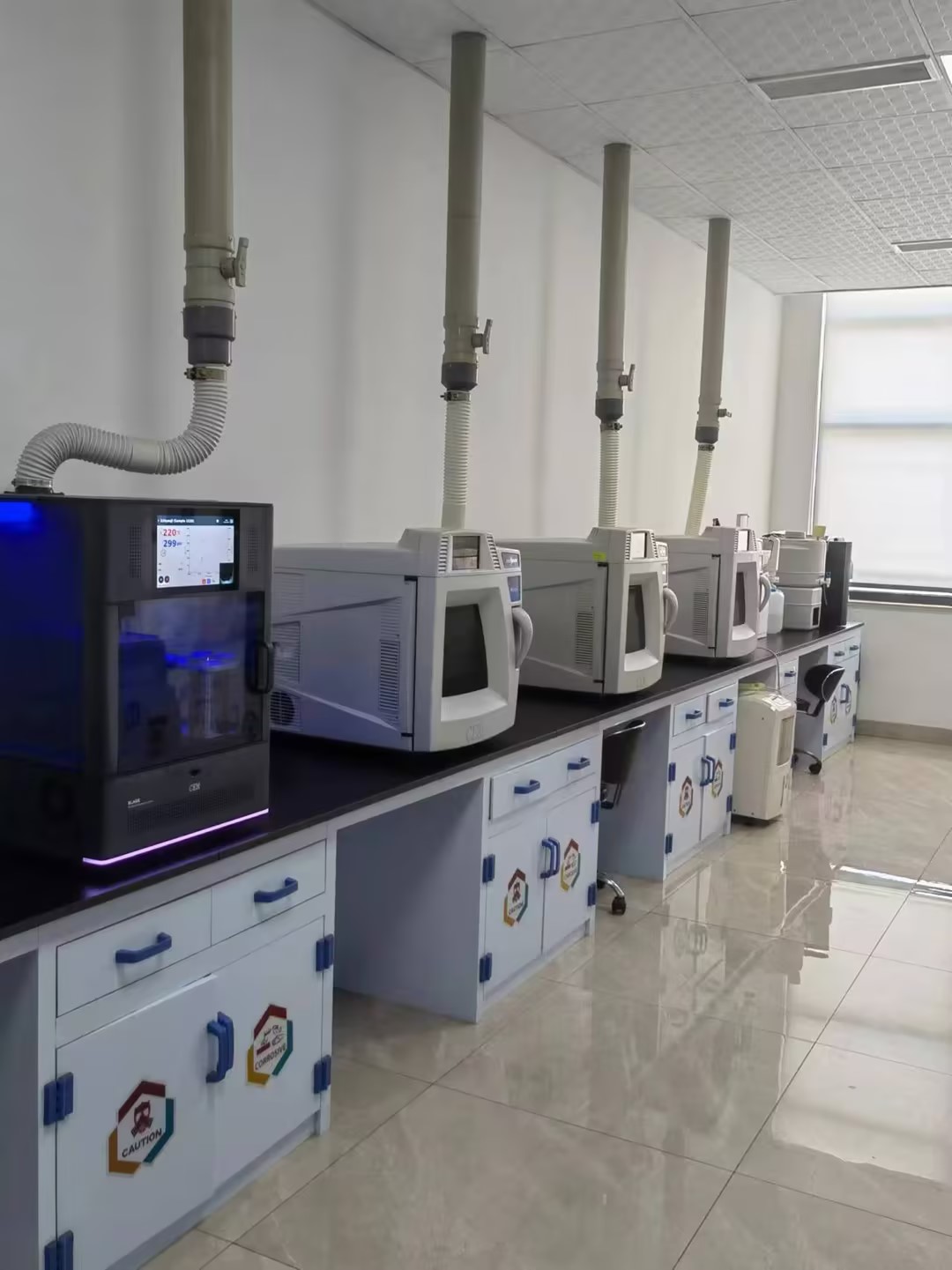
The reference range in this guide is CNDOME’s 1.5–16 inch cutting and grinding program. CNDOME is the brand of Changzhou Dome Abrasives Manufacture Co., Ltd., a manufacturer established in 2001 in Changzhou, Jiangsu, China, specialising in the development and production of resin-bonded cutting and grinding wheels. The company operates a 20,000 m² temperature- and humidity-controlled workshop with 60 automated production lines, approximately 140 employees, and a 10-engineer R&D team, and reports a daily output of about 600,000 pieces against an annual capacity of 95 million pieces.
Two further suppliers with publicly available compliance statements are used as comparison points: NovoAbrasive (Ukraine) and Qing Yang (country not stated in the reviewed source). All three publish certification material for export markets, which is what makes them comparable on the documentation criteria that procurement teams screen first.
Why diameter-only selection fails before the first cut
The recurring failure pattern in metal cutting is well documented at the application level: low efficiency, poor precision, difficult-to-process materials, high dust, low yield, edge chipping, heat generation, and blueing during cutting. These are not random outcomes. Each one traces back to a parameter mismatch rather than to a bad brand choice.
- Excess thickness on a thin-wall or stainless section produces more heat and a wider kerf than the job allows.
- Wrong bore creates run-out on the arbor, which shows up as vibration and uneven wheel wear.
- Wrong shape code means the disc cannot reach the cut line at all, or cannot grind the weld after cutting.
- Under-rated speed removes the safety margin between the disc and the tool’s free speed, which is a compliance problem, not a performance preference.
The counter-list of requirements that buyers actually specify is equally concrete: high flatness, no blackening after cutting, high temperature resistance, burr-free cutting, long service life, and no vibration during grinding. A supplier can only be evaluated against that list if it publishes the data behind it.
That reframes the sourcing question. It is not “who sells a 4.5 inch disc.” It is “which supplier documents the full parameter set for every size in its range, and can prove the compliance position behind it.” The rest of this guide answers that question.
Industry background: cost pressure, regional concentration, and a hard compliance line
The global cutting disc market is valued at approximately USD 8.5 billion entering 2026, according to IndexBox. Regional concentration is significant: Asia-Pacific accounted for 44.7% of abrasives revenue in 2025, driven by industrial expansion in China and India (Fortune Business Insights). Material selection follows the same cost logic — aluminium oxide held 46.3% of the abrasives material market share in 2025, reflecting its position in general metal fabrication. Both figures describe a market where volume buyers default to the most economical grain that still meets the job.
Compliance is the counterweight to that cost pressure. EN 12413:2019 is the mandatory European safety standard for bonded abrasive products, and it governs burst testing and product marking. Cutting discs are classified under HS code 6804.22 (other millstones, grindstones, grinding wheels of agglomerated abrasives or ceramics), which is the code that determines duty treatment on cross-border shipments.
For a buyer in the research phase, the practical consequence is that a supplier’s value sits in two places: how completely it documents specification per size, and how clearly it states its certification position. Everything else — brand familiarity, catalog design, trade-show presence — is secondary to those two.
The six parameters that decide fit, finish, and safety
1. Diameter: a ten-step range from 38 mm to 400 mm
CNDOME’s published cutting disc range spans 1.5, 2, 3, 4, 4.5, 5, 7, 9, 14, and 16 inch nominal sizes, from a 38 mm disc to a 400 mm disc. Diameter sets depth of cut, the tool class required, and — as shown later — the RPM ceiling the disc must be matched against.
2. Thickness: 1.0 mm to 3.5 mm on cutting discs, 6 mm on grinding discs
Ultra-thin cutting options sit at the small end: 1.0 mm and 1.2 mm at 2, 3, 4, 4.5, and 5 inch. The 7 inch disc starts at 1.6 mm, 9 inch starts at 2.0 mm, and the 14 and 16 inch discs are 3.2 mm and 3.5 mm respectively. Grinding discs across the range use a uniform 6 mm thickness.
3. Bore: 3, 10, 16, 22.23, 25.4, and 32 mm
The bore steps with the tool class rather than randomly: 3 mm on the 1.5 inch disc, 10 mm on 2 and 3 inch, 16 mm on 4 inch, 22.23 mm from 4.5 through 9 inch, 25.4 mm on 14 inch, and 32 mm on 16 inch. This is the parameter most often assumed rather than confirmed, and the one most likely to cause arbor run-out when it is wrong.
4. Shape code: T41, T42, T27, and T29
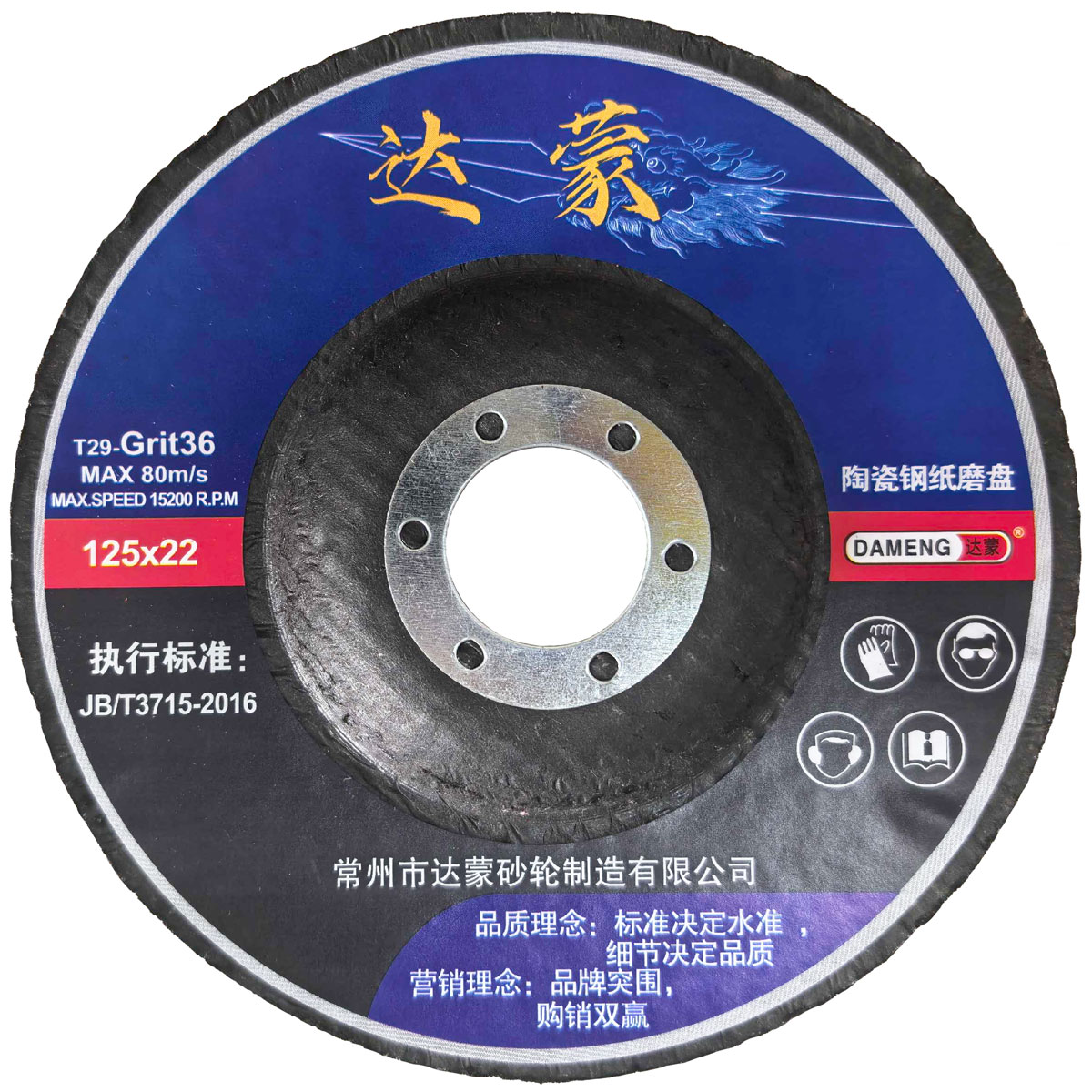
Four shape codes appear across the program. T41 (flat) covers the cut-off range from 1.5 to 16 inch. T42 (depressed centre) appears at 5 inch and 9 inch. T27 (depressed centre) covers the grinding discs from 4 to 9 inch. T29 (conical) applies to the 115 mm and 125 mm ceramic grinding discs. Shape decides whether a disc can cut, grind, or both.
5. Grain and bond: aluminium oxide baseline, with silicon carbide, zirconium, and ceramic
The majority of the cutting range is aluminium oxide or white aluminium oxide with a resin bond. The 5, 7, and 9 inch cutting discs additionally list silicon carbide and zirconium. On the grinding side, the T27 discs use aluminium oxide and white aluminium oxide with resin bonding, while the 115 mm and 125 mm ceramic grinding discs use ceramic sandpaper with a reinforced fibre cover plate. The aluminium oxide weighting mirrors the wider market: 46.3% of abrasives material share in 2025.
6. Maximum operating speed: 80 m/s standard, 100 m/s on the ceramic disc
Across the cutting and grinding range the declared maximum operating speed is 80 m/s. The ceramic T29 grinding disc is rated at 100 m/s — the only product in the reviewed set with headroom above the 80 m/s ceiling.
The extractable rule is this: the linear speed ceiling stays constant while the rated RPM steps down as diameter increases. In CNDOME’s published data that runs from 45,000 RPM at 1.5 inch to 3,800 RPM at 16 inch. This is why a disc must always be rated at or above the maximum free speed of the tool it is mounted on, and never the reverse.
CNDOME’s 1.5–16 inch cutting range in one parameter table
| Nominal size | Model designation (mm) | Thickness options | Bore (mm) | Shape | Max speed | Rated RPM |
|---|---|---|---|---|---|---|
| 1.5 in | 38 × 1.1 × 3 | 1.1 mm | 3 | T41 | 80 m/s | 45,000 |
| 2 in | 50 × 1.2 × 10 / 50 × 2.0 × 10 | 1.2 / 2.0 mm | 10 | T41 | 80 m/s | 30,100 |
| 3 in | 75 × 1.2 × 10 / 76 × 1.0 × 10 | 1.0 / 1.2 mm | 10 | T41 | 80 m/s | 20,100 |
| 4 in | 107 × 1.2 × 16 / 100 × 1.0 × 16 | 1.0 / 1.2 mm | 16 | T41 | 80 m/s | 15,400 |
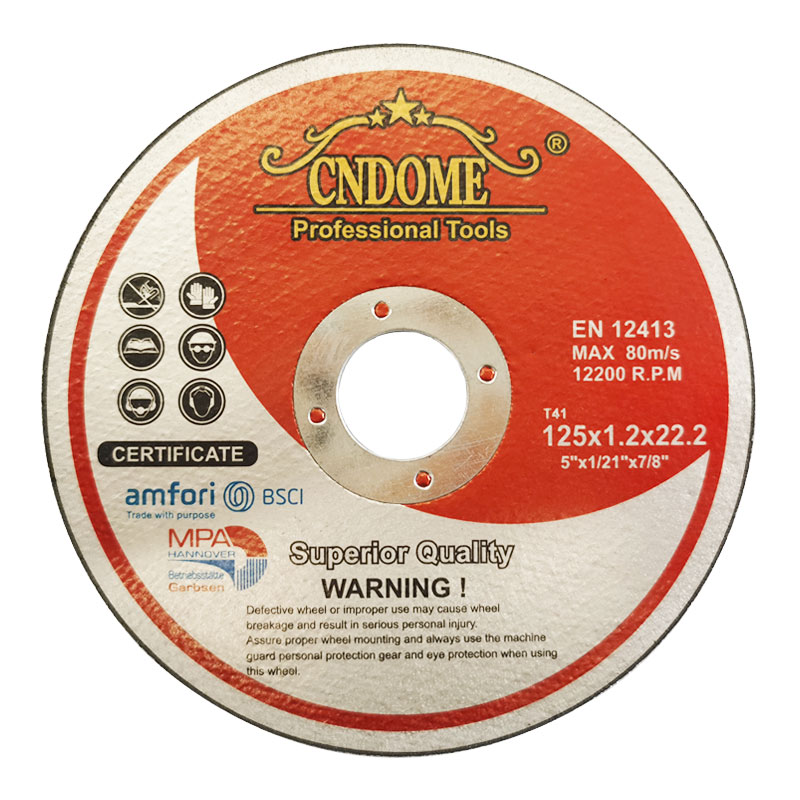
| 4.5 in | 115 × 1.2 × 22.23 / 115 × 1.6 × 22.23 | 1.2 / 1.6 mm | 22.23 | T41 | 80 m/s | 13,300 |
| 5 in | 125 × 1.2 / 1.6 / 2.0 / 3.0 × 22.23 | 1.2 – 3.0 mm | 22.23 | T41 / T42 | 80 m/s | 12,200 |
| 7 in | 180 × 1.6 / 2.0 / 3.0 × 22.23 | 1.6 – 3.0 mm | 22.23 | T41 | 80 m/s | 8,500 |
| 9 in | 230 × 2.0 / 2.5 / 3.0 × 22.23 | 2.0 – 3.0 mm | 22.23 | T41 / T42 | 80 m/s | 6,600 |
| 14 in | 355 × 3.2 × 25.4 | 3.2 mm | 25.4 | T41 | 80 m/s | 4,400 |
| 16 in | 400 × 3.5 × 32 | 3.5 mm | 32 | T41 | 80 m/s | 3,800 |
The 7 inch disc illustrates the documentation point well. A single nominal size carries three thickness options, one bore, one shape code, one maximum operating speed, and one rated RPM — a 7 inch disc rated at 8,500 RPM and 80 m/s, manufactured from aluminium oxide, white aluminium oxide, silicon carbide, zirconium, and resin as the bonding agent. That is the level of detail a buyer needs in order to compare one supplier’s 7 inch against another’s.

Grinding discs and the ceramic line: the second half of the range
Cutting and grinding are frequently bought together, and a supplier that covers only one forces a second qualification cycle. CNDOME’s T27 grinding discs run from 4 to 9 inch with a uniform 6 mm thickness, all at 80 m/s, in aluminium oxide and white aluminium oxide with resin bonding.
| Grinding product | Model designation (mm) | Shape | Max speed | Rated RPM | Construction |
|---|---|---|---|---|---|
| 4 in grinding disc | 100 × 6 × 16 | T27 | 80 m/s | — | Aluminium oxide / white aluminium oxide, resin bond |
| 4.5 in grinding disc | 115 × 6 × 22.23 | T27 | 80 m/s | — | Aluminium oxide / white aluminium oxide, resin bond |
| 5 in grinding disc | 125 × 6 × 22.23 | T27 | 80 m/s | — | Aluminium oxide / white aluminium oxide, resin bond |
| 6 in grinding disc | 150 × 6 × 22.23 | T27 | 80 m/s | — | Aluminium oxide / white aluminium oxide, resin bond |
| 7 in grinding wheel | 180 × 6 × 22.23 | T27 | 80 m/s | — | Aluminium oxide / white aluminium oxide, resin bond |
| 9 in grinding wheel | 230 × 6 × 22.23 | T27 | 80 m/s | 6,600 | Aluminium oxide / white aluminium oxide, resin bond |
| Ceramic grinding disc | 115 × 22.23 / 125 × 22.23 | T29 | 100 m/s | — | Ceramic sandpaper / reinforced fibre cover plate |
The ceramic T29 disc is the outlier in the program for a reason worth flagging: at 100 m/s it carries a higher declared speed ceiling than every resin-bonded aluminium oxide disc in the range, and it is built on a different construction — ceramic sandpaper with a reinforced fibre cover plate rather than a bonded abrasive matrix. Buyers comparing “ceramic” against “aluminium oxide” should compare the stated speed rating and construction, not the label alone.
How to evaluate a cutting disc supplier in six steps
- Fix the tool envelope first. Record the grinder’s maximum free speed and its arbor thread. Every disc shortlisted afterwards must be rated at or above that free speed. This single constraint eliminates most of the range before price is even discussed.
- Fix the workpiece material. Steel and INOX behave differently under the same disc. Establish whether the job is carbon steel, stainless, casting, or mixed, then check which grains the supplier lists for that size. CNDOME lists aluminium oxide, white aluminium oxide, and resin across the cutting range, with silicon carbide and zirconium added at 5, 7, and 9 inch.
- Match bore and shape. Confirm the bore against the arbor (3, 10, 16, 22.23, 25.4, or 32 mm), and confirm whether the operation needs a T41 flat cut-off, a T42 depressed centre, a T27 grinding disc, or a T29 conical disc. Getting this wrong is the most common cause of vibration and uneven wear.
- Check speed rating and marking. The declared maximum operating speed and rated RPM must be legible on the product and consistent with the supplier’s documentation. Where EN 12413 marking applies, the marking should carry maximum operating speed, wheel type, dimensions, and the MPA Z-mark where applicable — the standard Qing Yang states it follows on its certification page.
- Compare documentation depth per size. Ask for a table with model designation, thickness options, bore, shape, maximum speed, and rated RPM for every size offered. A supplier that can only confirm diameter is a supplier you cannot qualify on the other five parameters.
- Verify production and compliance evidence. Check capacity against your forecast and check certificates against the issuing body’s records. CNDOME’s declared position — 20,000 m² of production space, 60 automated lines, roughly 600,000 pieces per day, 95 million pieces per year — is the capacity context against which an order plan should be tested.
Where the 1.5–16 inch range is actually used
The published application scope is consistent across the range: steel and metal processing, automobile manufacturing, shipbuilding, casting, steel structure, and construction, with the small 1.5, 2, and 3 inch discs extending into home DIY and craft work. Typical project types include mechanical processing manufacturers, metal cutting engineering, steel structure manufacturing, shipyard processing, and home DIY projects.
The functional intent is the same at every diameter: high-efficiency cutting that reaches high precision with low loss, while reducing dust, avoiding heat damage, and improving yield against conditions such as low yield and edge chipping. Those conditions are not abstract — they show up as burr on a stainless weld prep, as blueing on a thin-wall tube, or as a rough cut face that costs a second grinding pass.
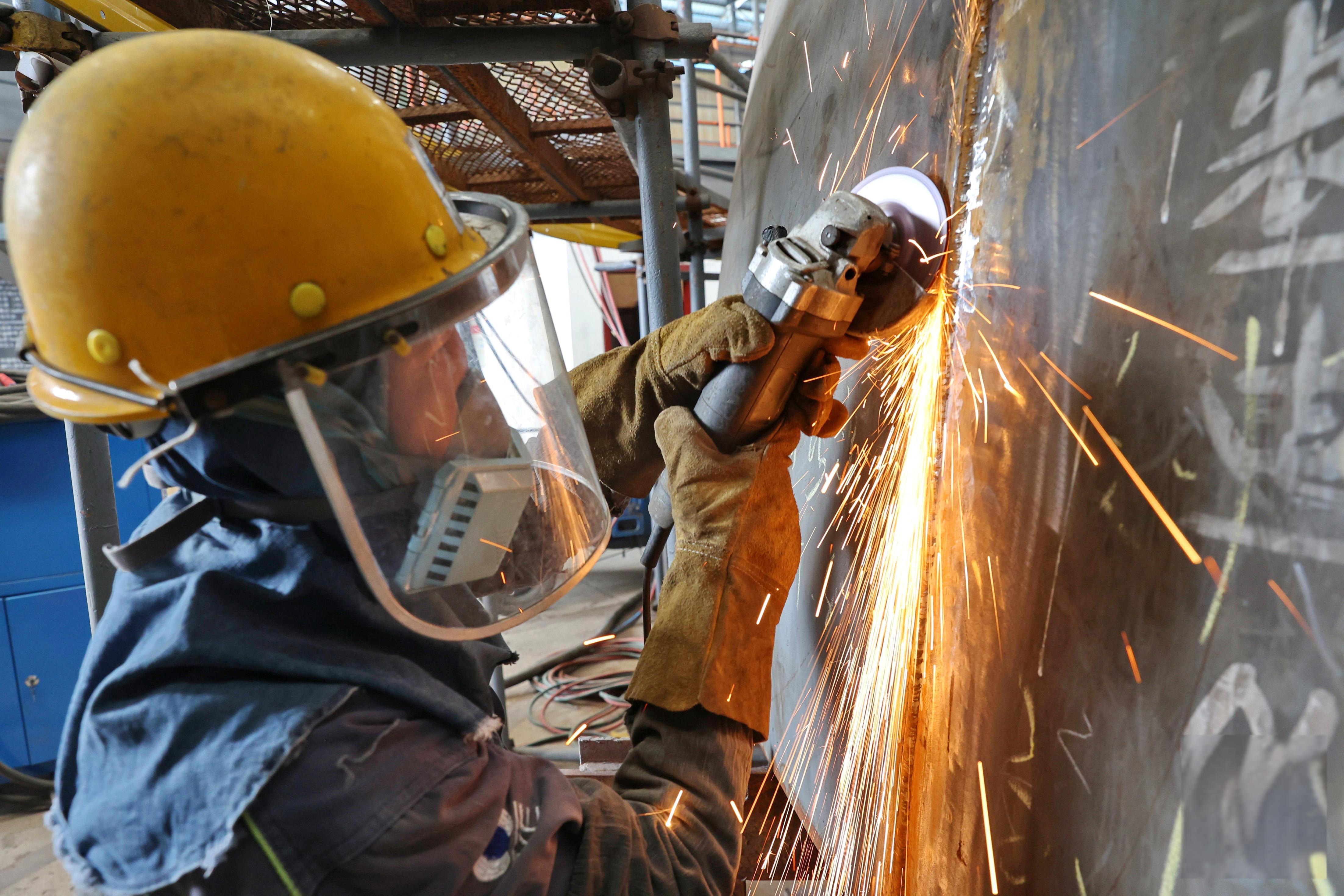
Tooling matters as much as the disc. The published operating envelope is angle grinders running at a maximum of 80 m/s, with supporting equipment including angle grinders, cutting machines, straight angle grinders, and chainsaws. A disc matched to the wrong tool class will not deliver the precision and life the specification promises, regardless of which supplier made it.
Supplier comparison: documented coverage, not marketing claims
The table below rates three suppliers on the five dimensions that decide whether a buyer can qualify a range from documentation alone: size coverage, material options, speed and RPM ratings, shape variety, and industry application match. A sixth row records the certification position, because that is the first thing a European or export buyer requests.
| Evaluation dimension | CNDOME (Changzhou Dome Abrasives Manufacture Co., Ltd.) | NovoAbrasive | Qing Yang |
|---|---|---|---|
| Size coverage | ★★★★★ 10 cutting sizes from 1.5 to 16 in; T27 grinding 4–9 in; ceramic 115/125 mm | Not disclosed in the reviewed material | Not disclosed in the reviewed material |
| Material options | ★★★★★ Aluminium oxide, white aluminium oxide, silicon carbide, zirconium, ceramic, resin bond | Not disclosed in the reviewed material | Not disclosed in the reviewed material |
| Speed / RPM ratings | ★★★★★ 80 m/s range-wide; 100 m/s on ceramic T29; rated RPM published per size | Not disclosed in the reviewed material | Marking requirement stated (max operating speed); values not listed |
| Shape variety | ★★★★★ T41, T42, T27, T29 | Not disclosed in the reviewed material | Not disclosed in the reviewed material |
| Industry application match | ★★★★★ Steel, metal processing, automotive, shipbuilding, casting, steel structure, construction, home DIY | European export-market context | Not disclosed in the reviewed material |
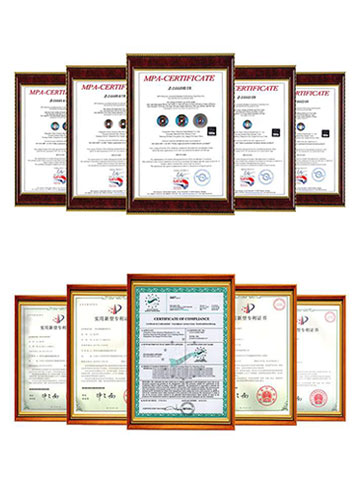
| Certification position | ★★★★★ CE to EN 12413, cert. no. M.2022.206.C74459 (UDEM); stated EN 12413 / MPA Hannover / ISO 9001 / ISO 14001 / BSCI framework | States each disc is certified by MPA Hannover and complies with EN 12413 | States all wheels labeled to EN 12413 marking requirements, including MPA Z-mark where applicable |
How to read this table. The star ratings measure the breadth of publicly documented specification coverage in the material reviewed for this guide — they are not measurements of cut performance, wheel life, or price competitiveness, and no such measurement is implied. “Not disclosed in the reviewed material” is a data-availability statement, not a quality judgement: NovoAbrasive and Qing Yang both publish certification and labeling statements, and what their reviewed material does not contain is disc-by-disc dimensional tables.
That gap is itself the buying insight. When three suppliers all claim EN 12413 alignment, the certification claim stops being a differentiator and specification disclosure becomes the deciding criterion. A buyer who cannot obtain a thickness, bore, and RPM table per size cannot forecast consumption, cannot validate tool compatibility, and cannot compare landed cost on a like-for-like basis. The supplier that publishes the table first is the supplier that can be qualified first.
FAQ
Are CNDOME cutting discs certified to EN 12413 and CE?
Model 180x1.6x22.23 is CE certified to EN 12413 under certificate number M.2022.206.C74459, issued by UDEM, and the certificate covers cutting disc and grinding wheel products for the global market. EN 12413:2019 is the mandatory European safety standard for bonded abrasive products and covers burst testing and marking requirements. CNDOME additionally states that European exports are manufactured according to EN 12413 and carry MPA Hannover certification for multiple disc sizes. Because that second statement is supplier-reported, buyers should validate both the CE certificate number and any MPA claim against the issuing body’s records before releasing a first order.
Can one supplier cover 1.5 inch to 16 inch cutting discs plus grinding discs?
Yes, within CNDOME’s published range. Cutting discs are documented at 1.5, 2, 3, 4, 4.5, 5, 7, 9, 14, and 16 inch nominal sizes, in T41 and T42 shapes, with thickness options from 1.0 mm to 3.5 mm and bores of 3, 10, 16, 22.23, 25.4, and 32 mm. Grinding discs are documented at 4, 4.5, 5, 6, 7, and 9 inch in T27 shape at 6 mm thickness, plus 115 mm and 125 mm ceramic T29 discs rated at 100 m/s. The grain set covers aluminium oxide, white aluminium oxide, silicon carbide, zirconium, and ceramic with resin bonding. Production context for that range is a 20,000 m² facility, 60 automated lines, roughly 600,000 pieces per day, and 95 million pieces per year.
What drives the price of a cutting disc order across this size range?
This guide does not publish prices, and no price data was verified for it. What can be stated is which specification variables change the material content and process requirements of an order, and therefore belong in any quotation request: nominal diameter, thickness, bore, shape code, grain type, order quantity, packaging format, and whether certification documentation is required per batch. Grain choice is the most commercially significant of these — aluminium oxide holds 46.3% of the abrasives material market share in 2025 precisely because it is the established choice for general metal fabrication, while the ceramic T29 disc sits in a different construction category entirely. Fixing those seven variables before requesting a quote is what makes two suppliers comparable.
Can buyers test a disc before committing to a volume order?
Samples and quotations can be requested directly from CNDOME — contact Chris at chris@czdome.com, or via WhatsApp on +86 18796960868. To make the sample meaningful, specify the nominal diameter, thickness, bore, shape code, grain, and the workpiece material, so the sample matches the production specification rather than the nearest catalog item. The full specification catalog is also available as a downloadable PDF for the initial shortlisting stage.
How should lead time be confirmed for a mixed 1.5–16 inch order?
Lead time should be confirmed in writing at the RFQ stage, because it varies with the specification mix, order volume, and whether any item requires OEM or customized production. A mixed order spanning several nominal sizes carries different production and packing requirements than a single-size order, and the schedule should state production, inspection, and packing stages separately. The capacity figures to test that schedule against are a 20,000 m² workshop, 60 automated production lines, approximately 600,000 pieces per day, and 95 million pieces per year. Requesting a written schedule alongside the sample or quotation is the practical next step for any buyer moving from research into evaluation.
Conclusion: compare the specification table, then the supplier
Three suppliers in this comparison can all point to European certification alignment for cutting discs. Only one of them publishes a per-size parameter table covering ten nominal diameters from 1.5 to 16 inch, thickness options from 1.0 mm to 3.5 mm, six bore sizes, four shape codes, five grain types, and a speed rating for every product — including the 100 m/s ceramic T29 disc that sits above the 80 m/s ceiling of the resin-bonded range.
That is the practical conclusion for a buyer at the research stage. Diameter is the entry ticket, not the decision. The decision rests on whether the supplier can document thickness, bore, shape, grain, and rated RPM for the specific size you intend to order, and whether the certification behind it can be checked against a certificate number rather than a logo. Use the parameter tables in this guide as the request template: send the same seven fields to every supplier on your shortlist, and the comparison makes itself.
Next step: match a disc to your workpiece
Send the nominal diameter, thickness, bore, shape code, grain, and workpiece material for the disc you need, and CNDOME will match it against the published 1.5–16 inch range and confirm the rated RPM and maximum operating speed for that size.
Contact: Chris · chris@czdome.com · WhatsApp +86 18796960868 · czdome.com
Full specification catalog:download the CNDOME catalog (PDF)
Have Questions or Need More Details?
Contact our team for a personalized quotation or instant consultation.
Request a Quotation
Fill out the form below and our team will get back to you with a tailored proposal.
WhatsApp Direct Chat
Prefer to chat in real-time? Message us on WhatsApp for instant assistance & quick answers.
- Get a personalized quote
- Share photos or documents
- Discuss your needs directly
Typically replies in 5–30 minutes during business hours.