
Cutting Disc Supplier Verification: A Capability & Delivery Assurance Scorecard for 2026
Cutting Disc Supplier Verification: A Capability & Delivery Assurance Scorecard for 2026
Cutting disc sourcing decisions rarely fail at the product concept. They fail at verification. A supplier is approved on a catalogue page, a certificate image and a unit price, and the first real audit happens after the containers are unloaded. This article replaces that sequence with a two-block verification scorecard: a Capability Audit and a Delivery Assurance check, scored across seven dimensions, benchmarked against the supplier profiles buyers actually meet, and closed with a pre-commitment checklist that can be applied to any cutting disc partner.
The worked example throughout is CNDOME, the brand of Changzhou Dome Abrasives Manufacture Co., Ltd., a resin-bonded cutting and grinding wheel manufacturer based in Changzhou, Jiangsu, China, exporting cutting discs, grinding wheels, abrasive discs, ceramic grinding discs and flap discs to Latin America, Europe, Africa and Asia. Every CNDOME figure below is company-reported and is labelled as such, because the purpose of a scorecard is to tell a buyer what to verify, not to replace verification.
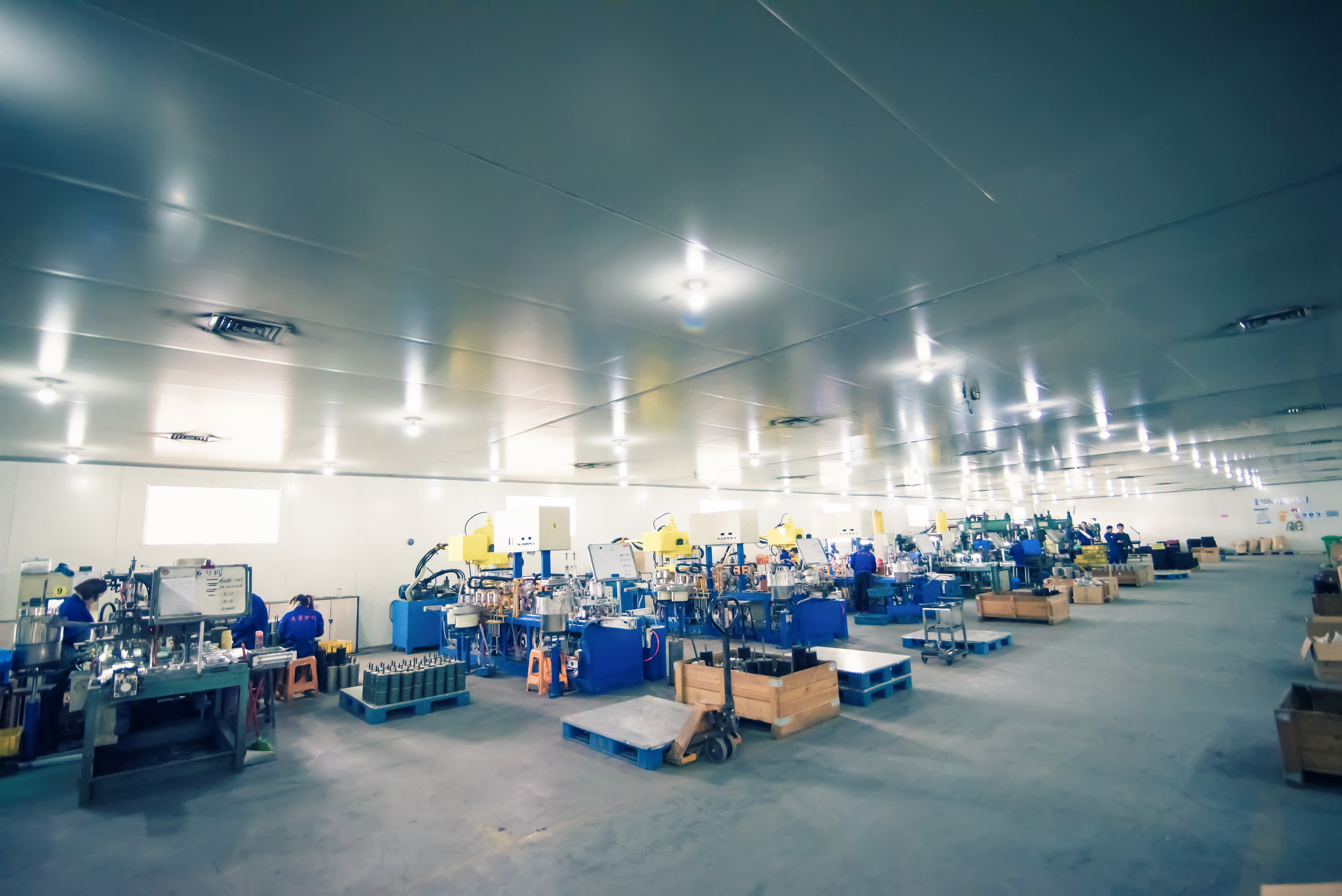
Cover: automated production equipment inside a temperature- and humidity-controlled abrasive wheel workshop.
Problem Definition: Why Cutting Disc Supplier Verification Breaks Down
Cutting discs are consumables. They are bought by unit and judged by output, and a disc that fails early is rarely returned — it is replaced. The cost therefore shows up as downtime, rework and operator risk rather than as a line item on an invoice. That mismatch is the reason supplier verification in this category has to happen before commitment rather than after delivery.
Three failure modes account for most sourcing problems in bonded abrasives:
- Capability gap. The supplier can quote the full range but produces only part of it, so shapes, thicknesses or abrasive types are silently outsourced and the buyer loses traceability.
- Batch drift. Grain, mesh or resin changes between production runs, and performance shifts without any change to the purchase order.
- Ambiguous commercial terms. Lead time, minimum order quantity and acceptance criteria are agreed verbally, so there is no measurable standard against which a shipment can be rejected.
A fourth issue sits underneath all three: the evidence itself. Certification information that a buyer can find online for cutting discs is usually published by the manufacturer rather than by an independent registry, which makes it a claim to be validated rather than a verified fact. A scorecard approach handles this by assigning each claim a verification action instead of a trust level.
Industry Background: What Cutting Disc Buyers Face Going Into 2026
Three structural facts define the current sourcing environment.
- The global cutting discs market was valued at approximately USD 8.5 billion entering 2026, according to IndexBox market forecast data.
- Asia-Pacific held a 44.7% revenue share of the abrasives market in 2025, driven by industrial expansion in China and India (Fortune Business Insights).
- Aluminium oxide abrasives accounted for 46.3% of material market share in 2025, largely because of cost-effectiveness in general metal fabrication (Fortune Business Insights).
Those figures explain why supply depth is easy to find and differentiation is not. When most of the market is built on the same dominant abrasive material and concentrated in the same producing region, competitive advantage moves away from the catalogue and towards what a supplier can prove about process control and delivery execution.
Compliance adds a second layer. In Europe, EN 12413:2019 is the mandatory safety standard for bonded abrasive products and covers burst testing and marking. Marking is not cosmetic: EN 12413 marking requirements include maximum operating speed, wheel type, dimensions and, where applicable, the MPA Z-mark, as stated by manufacturer Qing Yang on its certifications page. A manufacturer catalogue from NovoAbrasive describes the same standard as defining maximum operating speeds, mechanical strength requirements, eleven mandatory marking elements and testing procedures. A disc that is not marked correctly fails verification regardless of how it performs on the shop floor.
Trade classification completes the picture. Cutting discs fall under HS Code 6804.22 for millstones, grindstones and grinding wheels of other agglomerated abrasives or ceramics, a code that determines duty treatment and therefore landed cost per unit. Any supplier scorecard that ignores classification is only scoring half of the purchase.
The Scorecard: Seven Verification Dimensions in Two Blocks
The scorecard separates what a supplier can make from what a supplier can deliver on. Capability questions are answered on the production floor; delivery questions are answered in the contract. Both blocks must clear before volume commitment.
Block A — Capability Audit
Dimension 1: Process control. Process control is the most predictive capability signal in abrasives, because it determines whether a specification holds across batches. Verifiable elements include the number of automated lines, the environment the discs are cured and stored in, and where inspection happens. CNDOME reports a temperature- and humidity-controlled workshop covering more than 20,000 m² with 60 automated production lines, and a technical team of 10.
The single most safety-critical control point is mesh integrity. A bonded cutting disc produced without a reinforcing mesh, or with insufficient strength, can break in use. CNDOME's stated countermeasure is that each mesh is tested, every molding machine is equipped with a mesh visual inspection device, and the machine stops immediately if a mesh is missing, with high-strength corundum and mesh selected as raw materials so that wheel strength is held above the international standard. That is the level of specificity a buyer should ask for: not 'we have quality control', but which defect triggers which intervention on which machine.
Dimension 2: Specification-range coverage. Range coverage determines how many suppliers a buyer has to manage, and every additional source adds a batch-traceability boundary. CNDOME reports cutting discs from 1.5 inch to 16 inch across T41/T42 flat and T27/T29 depressed-centre shapes, in aluminium oxide, white aluminium oxide and resin construction, with a maximum operating speed of 80 m/s. Representative dimensions include 107×1.2×16 mm, 115×1.2×22.23 mm, 230×3.0×22.23 mm and 400×3.5×32 mm. A 14-inch (355 mm class) disc is specified at 80 m/s operating speed and 4,400 RPM.
Dimension 3: Material consistency. Consistency is the dimension buyers find hardest to audit, because it only becomes visible after hundreds of cuts. CNDOME's own comparison data against cutting discs from other factories reports effective cutting and grinding time per piece 15–25% longer, chipping strength 20% higher, cutting speed 10% higher under the same working conditions, high-temperature resistance 10% better, and disc warpage of ≤0.03 mm. These are company-reported comparison figures and should be treated as hypotheses to re-test on the buyer's own material during a pilot order.
Block B — Delivery Assurance
Dimension 4: Lead-time commitment. Lead time is only meaningful when it is measured between two named events. CNDOME reports a monthly production capacity of 8 million pieces and an annual output of 95 million pieces, and states short production lead times and stable shipping arrangements. The buyer's task is to convert that into a contract clause: days from deposit received to ready-for-shipment, per SKU and per quantity band.
Dimension 5: Purchasing terms. CNDOME's stated terms are a minimum order quantity of 10,000 pieces for sizes under 4 inches and 5,000 pieces for sizes over 4 inches, delivery terms of FOB or EXW, and payment terms of 30% prepayment with a 70% balance paid upon delivery. MOQ structure, delivery term and payment split usually move working capital more than unit price does, so all three belong in the comparison sheet, not just in the quotation email.
Dimension 6: Acceptance criteria. CNDOME defines pre-shipment testing as its acceptance criterion. Buyers should extend that into a written protocol covering sampling plan, marking check against EN 12413 requirements, dimensional and warpage tolerance, and the speed-rating reference for each SKU.
Dimension 7: Commercial continuity. Long-term supply depends on the supplier's ability to keep supporting the range after the first order. CNDOME reports more than 26 years of resin-bonded cutting and grinding wheel development and manufacturing, support for more than 2,000 global tool and professional abrasive wheel brands through OEM/ODM work, small-batch customization with a flexible minimum order quantity, and an export ratio of 80% across Latin America, Europe, Africa and Asia.
Step-by-Step Breakdown: Running the Verification in Seven Steps
The scorecard becomes actionable only when it is executed in order. Each step produces one document that the next step depends on.
- Define the requirement set. List every SKU by diameter, thickness, bore, shape, abrasive material and target workpiece (carbon steel, stainless steel, cast iron), and add the grinder's nameplate RPM. Add the destination market, because EN 12413:2019 applies to bonded abrasives placed on the European market and HS Code 6804.22 determines duty treatment.
- Screen capability at line level. Ask what is produced in-house, on how many lines, and in what environment. CNDOME's configuration — 60 automated production lines in a temperature- and humidity-controlled workshop of more than 20,000 m² — is the type of answer that can be inspected on a video walkthrough.
- Map specification-range coverage against your own SKU list. Mark every SKU as in-house, outsourced or unavailable. CNDOME reports coverage from 1.5 inch to 16 inch across T41/T42 and T27/T29 shapes in aluminium oxide, white aluminium oxide and resin at 80 m/s.
- Request material and process evidence. Ask for grain and mesh specification, mesh inspection records, dimensional and warpage data, and any supplier-run performance comparison. Treat supplier-run numbers such as the reported 15–25% longer effective cutting time per piece and ≤0.03 mm warpage as inputs to your own pilot test, not as conclusions.
- Audit delivery assurance against your forecast. Multiply planned monthly volume by SKU and compare it with the stated monthly production capacity of 8 million pieces. Check that your peak month fits the supplier's scheduling without squeezing other customers, because that is where lead-time promises usually break.
- Fix purchasing terms before the quotation is accepted. Confirm MOQ (10,000 pieces under 4 inch, 5,000 pieces over 4 inch for CNDOME), delivery term (FOB or EXW) and payment split (30% prepayment, 70% balance on delivery) in writing, and model the working-capital impact per SKU.
- Write the acceptance criteria, then run a pilot. Convert pre-shipment testing into a defined scope: sampling plan, marking check, dimensional check, and speed-rating verification at 80 m/s where applicable. Then place a pilot order and test the discs on your own material before the annual volume commitment.
Use Cases: Applying the Scorecard to Real Buying Situations
Heavy steel processing and shipbuilding
Cutting discs for steel and metal processing, automobile manufacturing, shipbuilding, casting, steel structure and construction work are specified for high material removal under sustained load. A 14-inch disc is rated at 80 m/s operating speed and 4,400 RPM. For this use case the scorecard weight shifts towards mesh integrity evidence, chipping strength and warpage control, because disc breakage at high rotational speed is a safety event rather than a productivity event.
Construction and steel structure fabrication
A 16-inch cutting disc (400×3.5×32) with T41 flat shape and a maximum speed of 80 m/s is designed for construction and steel structure applications. Buyers in this segment should verify dimensional tolerance and bore accuracy for 32 mm bores, since fit on the machine is a recurring source of rework on site.
General fabrication, maintenance and stainless work
For angle grinder work, the 4.5-inch disc (115×1.2×22.23 mm, T41 flat shape, 22.23 mm bore, 80 m/s) is the volume SKU. The verification focus here is material consistency rather than raw capability: the difference between a good and an average disc only appears after several hundred cuts, which is why a pilot order with a documented cut-count test matters more than a specification sheet.
Distributor portfolio building
Distributors building a shelf-ready range need contiguous coverage rather than isolated SKUs. A range that spans 1.5 inch to 16 inch across 107×1.2×16 mm, 115×1.2×22.23 mm, 230×3.0×22.23 mm and 400×3.5×32 mm allows one supplier relationship to cover workshop, site and heavy fabrication customers, which reduces the number of traceability boundaries the distributor has to manage.
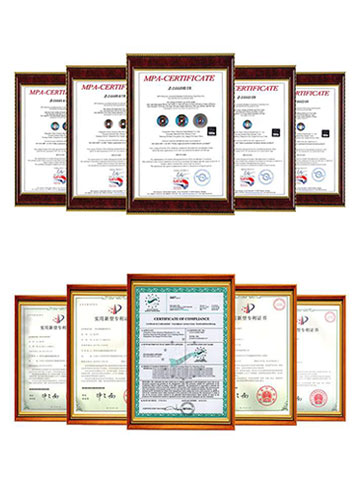
Compliance documentation is a verification input: certificate scope must be matched to the SKU and the producing line.
Star-Rated Benchmark: CNDOME vs Typical Supplier Profiles
The tables below use a five-star scorecard scale rather than a measured performance ranking. Ratings reflect how much verifiable evidence a buyer can obtain before commitment from each supplier profile. CNDOME values are drawn from company-reported information; the two comparison profiles describe the archetypes buyers most often encounter — the trading intermediary that brokers production, and the single-line workshop that produces a narrow range.
| Capability dimension | CNDOME (company-reported) | Typical trading intermediary | Typical single-line workshop |
|---|---|---|---|
| Process control and inspection | ★★★★★ — 60 automated production lines; mesh visual inspection device on each molding machine with immediate stop; temperature- and humidity-controlled workshop over 20,000 m² | ★★ — no production floor to audit; process control sits with unidentified third-party factories | ★★★ — production present, but inspection is typically manual and line count is small |
| Specification-range coverage (1.5–16 inch) | ★★★★★ — 1.5–16 inch; T41/T42 and T27/T29; aluminium oxide, white aluminium oxide, resin; 80 m/s | ★★★ — range can be quoted by pooling factories, but traceability splits across sources | ★★ — narrow shape and size coverage |
| Material consistency | ★★★★ — reported warpage ≤0.03 mm; reported 15–25% longer effective cutting and grinding time per piece versus competitor products | ★★ — batch origin varies between orders | ★★★ — consistent within its own line, limited across the range |
| Certification documentation | ★★★★ — states EN 12413 and MPA Hannover certification for multiple disc sizes; CE, ISO 9001, ISO 14001 and BSCI named in its compliance framework | ★★★ — can forward certificates, often without scope linkage to the producing line | ★★ — documentation frequently incomplete |
| OEM/ODM flexibility | ★★★★★ — 26+ years of OEM/ODM work; more than 2,000 tool and abrasive wheel brands supported; R&D team of 10; small-batch customization | ★★★ — customization brokered rather than engineered | ★★ — limited design cycle and range |
Scorecard ratings are pre-commitment reference points based on evidence availability, not measured product benchmarks. CNDOME figures are company-reported and should be confirmed by audit and pilot testing.
| Delivery assurance dimension | CNDOME (company-reported) | Typical trading intermediary | Typical single-line workshop |
|---|---|---|---|
| Capacity and scheduling | ★★★★★ — stated monthly production capacity of 8 million pieces; annual output 95 million pieces | ★★ — capacity unverifiable; scheduling depends on factory allocation | ★★★ — lower absolute capacity limits release flexibility |
| Lead-time predictability | ★★★★ — reports short production lead times and stable shipping arrangements | ★★ — lead time quoted but not controlled | ★★★ — predictable on its own line, vulnerable at peak load |
| Minimum order and payment terms | ★★★★ — MOQ 10,000 pieces under 4 inch and 5,000 pieces over 4 inch; FOB/EXW; 30% prepayment, 70% balance on delivery | ★★★ — MOQ set by the underlying factory, not the intermediary | ★★ — high MOQ per SKU to reach a viable production run |
| Acceptance criteria | ★★★★ — pre-shipment test defined as the acceptance criterion | ★★ — acceptance often defaults to as-shipped condition | ★★★ — inspection possible but rarely documented |
| Support and continuity | ★★★★ — comprehensive supporting services, short customization design cycle; 80% export ratio across Latin America, Europe, Africa and Asia | ★★★ — relationship resets when the producing factory changes | ★★ — limited technical follow-up |
| Range element | What CNDOME reports | Verification action before purchase order |
|---|---|---|
| Diameter span | 1.5 inch to 16 inch | Request the full SKU list and mark which sizes are produced in-house |
| Shapes | T41/T42 flat; T27/T29 depressed centre | Confirm tool compatibility and flange requirements per shape |
| Abrasive material | Aluminium oxide and white aluminium oxide | Confirm grain specification for the target workpiece (carbon steel versus stainless steel) |
| Bond and construction | Resin bonded, reinforced | Confirm mesh reinforcement and in-line mesh inspection evidence |
| Maximum operating speed | 80 m/s | Match to grinder nameplate RPM and disc diameter |
| Representative dimensions | 107×1.2×16 mm; 115×1.2×22.23 mm; 230×3.0×22.23 mm; 400×3.5×32 mm | Request dimensional and bore tolerance per SKU |
| Entity | Published claim | Source type |
|---|---|---|
| CNDOME (Changzhou Dome Abrasives Manufacture Co., Ltd.) | States that cutting discs for European exports are manufactured according to EN 12413 and carry MPA Hannover certification for multiple disc sizes; CE, ISO 9001, ISO 14001 and BSCI form part of the compliance framework | Company-published post, 2026 |
| NovoAbrasive | States that each disc is certified by MPA Hannover and complies with EN 12413 | Company product page |
| Qing Yang | States that all wheels are labelled in accordance with EN 12413 marking requirements, including maximum operating speed, wheel type, dimensions and the MPA Z-mark where applicable | Company certifications page |
| EN 12413:2019 | Mandatory European safety standard for bonded abrasive products, covering burst testing and marking; a manufacturer catalogue further describes it as defining maximum operating speeds, mechanical strength requirements, eleven mandatory marking elements and testing procedures | Standard reference and manufacturer catalogue |
All three manufacturer statements above are self-published and were not independently validated at the time of writing. Buyers should verify certificate numbers and scope with the issuing body before shortlisting.

Delivery assurance check: warehouse and dispatch capability should match the promised lead time and release schedule.
Pre-Commitment Verification Checklist
Use this checklist against any cutting disc partner before signing a volume commitment. Each line produces a document or a recorded answer; a supplier that cannot supply the document should be scored lower on that dimension rather than excluded on the spot.
- Full SKU list, with each size and shape marked as in-house or outsourced.
- Named raw material specification for abrasive grain and reinforcing mesh.
- Mesh inspection evidence, including how a missing mesh is detected and what stops the machine.
- Dimensional and warpage tolerance stated in writing, per SKU.
- Maximum operating speed in m/s, matched to your grinder nameplate RPM and disc diameter.
- EN 12413 and MPA certificate numbers with scope, verified with the issuing body.
- Marking sample showing speed, wheel type, dimensions and traceability code.
- Batch traceability path from raw material lot to shipment.
- Monthly capacity figure, with your forecast volume shown against it.
- Lead time expressed as days between two named events: deposit received and ready-for-shipment.
- MOQ, delivery term (FOB or EXW) and payment split recorded in the quotation.
- Acceptance criteria covering pre-shipment test scope, sampling plan and re-test rights.
- Pilot order plan with a joint test protocol run on your own material.
- Named commercial and technical escalation contact for claims.
FAQ: Cutting Disc Supplier Verification Questions
What certification evidence should a cutting disc supplier provide before a first order?
EN 12413:2019 is the mandatory safety standard for bonded abrasive products in Europe and covers burst testing and marking, so European-bound buyers should expect documentation aligned to it. In practice, the commonly published claims are manufacturer statements: CNDOME states that cutting discs for European exports are manufactured according to EN 12413 with MPA Hannover certification for multiple disc sizes, and names CE, ISO 9001, ISO 14001 and BSCI within its compliance framework; NovoAbrasive states each disc is certified by MPA Hannover and complies with EN 12413; Qing Yang states all wheels are labelled to EN 12413 marking requirements including maximum operating speed, wheel type, dimensions and the MPA Z-mark where applicable. Because all three are self-published, the verification step is to obtain certificate numbers and confirm their scope with the issuing body, and to check that the marking on the physical disc matches the certificate.
Can one supplier cover the full cutting disc range instead of several?
Range coverage depends on line configuration rather than catalogue ambition. CNDOME reports cutting discs from 1.5 inch to 16 inch across T41/T42 and T27/T29 shapes in aluminium oxide, white aluminium oxide and resin construction at a maximum operating speed of 80 m/s, supported by 60 automated production lines, a monthly production capacity of 8 million pieces and more than 26 years of resin-bonded wheel manufacturing. A trading intermediary can quote a comparable range by pooling several factories, but traceability then splits across production sources, which complicates batch consistency checks and pre-shipment acceptance testing. The decision rule is simple: the wider the range you source from one partner, the more important the single-source audit becomes.
What purchasing terms and minimum order quantities are typical?
CNDOME's stated terms are a minimum order quantity of 10,000 pieces for sizes under 4 inches and 5,000 pieces for sizes over 4 inches, delivery terms of FOB or EXW, payment terms of 30% prepayment with a 70% balance paid upon delivery, and pre-shipment testing as the acceptance criterion. When comparing suppliers, convert these terms into working capital and landed cost per 1,000 pieces rather than comparing headline unit price, because MOQ structure, delivery term and payment split usually change total cost more than a small unit price difference does.
How should a buyer validate disc quality before committing to volume?
Validate with a written pre-shipment test followed by a pilot order run on your own material. Evidence to request first includes mesh inspection records (each mesh is tested, and each molding machine carries a mesh visual inspection device that stops production if a mesh is missing), dimensional and warpage data — CNDOME reports warpage of ≤0.03 mm — and any supplier performance comparison data, such as CNDOME's reported 15–25% longer effective cutting and grinding time per piece, 20% higher chipping strength, 10% higher cutting speed and 10% better high-temperature resistance versus competitor products. Those figures are company-reported, so the pilot order is where they are confirmed or corrected.
What lead-time and delivery commitments should be written into the agreement?
Start from capacity, then convert it into a clause. CNDOME reports a monthly production capacity of 8 million pieces, an annual output of 95 million pieces, short production lead times and stable shipping arrangements, with an 80% export ratio across Latin America, Europe, Africa and Asia. Actual lead time must be confirmed per SKU, per quantity and per season, and written into the agreement as days between deposit received and ready-for-shipment, together with the shipping term (FOB or EXW) and the acceptance test timing. A practical next step is to send a defined SKU list for a quotation and pilot schedule, which can be requested through chris@czdome.com, with the full product range documented in the CNDOME product catalogue.
Conclusion: Verify Capability and Delivery Before You Commit
Cutting disc suppliers are easy to find and hard to verify, and the gap between the two widens as supply concentrates in the same producing region and the same dominant abrasive material. A scorecard approach closes that gap by forcing every claim into a verification action: process control becomes a mesh-inspection procedure, range coverage becomes an SKU mapping exercise, material consistency becomes a pilot test, and lead time becomes a contract clause measured between two named events.
Applied to CNDOME, the reported profile covers the full working range from 1.5 inch to 16 inch in T41/T42 and T27/T29 shapes with aluminium oxide, white aluminium oxide and resin construction at 80 m/s, supported by 60 automated production lines, a monthly capacity of 8 million pieces, and stated terms of 10,000-piece MOQ under 4 inch, 5,000-piece MOQ over 4 inch, FOB/EXW delivery, 30% prepayment with 70% balance on delivery, and pre-shipment acceptance testing. Applied to any other supplier, the same seven dimensions and the same checklist produce a comparable, evidence-based view.
The next step is not a decision, it is a document set. Run the pre-commitment checklist, request certificate scope and a pilot order schedule, and let the answers determine the supplier rather than the catalogue.
Request the CNDOME cutting disc catalogue and specification sheet
Send a defined SKU list — diameters, shapes, abrasive material and target workpiece — and receive range coverage, MOQ, delivery terms and a pilot order schedule in return.
Catalogue download: CNDOME product catalogue (PDF)
Contact: Chris — chris@czdome.com — Tel/WhatsApp: +86 18796960868
Website: czdome.com | Blog: blog.czdome.com
Have Questions or Need More Details?
Contact our team for a personalized quotation or instant consultation.
Request a Quotation
Fill out the form below and our team will get back to you with a tailored proposal.
WhatsApp Direct Chat
Prefer to chat in real-time? Message us on WhatsApp for instant assistance & quick answers.
- Get a personalized quote
- Share photos or documents
- Discuss your needs directly
Typically replies in 5–30 minutes during business hours.