Cutting Disc Compliance Guide: CNDOME RPM, Bore & Material Specs
Cutting Disc Compliance Guide: CNDOME RPM, Bore & Material Specs
A cutting disc is compliant when four parameters agree: the maximum RPM marked on the disc, the bore diameter, the thickness, and the maximum operating speed — and when the abrasive composition and shape code match the material being cut. CNDOME (Changzhou Dome Abrasives Manufacture Co., Ltd.) produces resin-bonded cutting discs from a 1.5-inch 38 × 1.1 × 3 mm T41 disc rated at 45,000 RPM up to a 16-inch 400 × 3.5 × 32 mm disc rated at 3,800 RPM, which allows a single supplier specification to cover an entire product programme.
This guide is written for importers, distributors and procurement teams who must defend a purchasing decision to a technical department, a customs file or an end customer. It maps CNDOME size classes against speed ratings (80 m/s for resin-bonded discs, 100 m/s for ceramic T29 discs) and material composition (Aluminium Oxide, White Aluminium Oxide and resin bonding), then sets out the checks that turn a specification sheet into a compliant shipment.
Problem Definition: Where Cutting Disc Compliance Breaks Down
Compliance failures on cutting discs are rarely caused by a missing certificate. They come from four mismatches that only appear when the disc is mounted on the machine.
- RPM mismatch. A disc must be rated at a maximum RPM equal to or higher than the no-load speed of the grinder it is fitted to. A 1.5-inch 38 × 1.1 × 3 mm disc at 45,000 RPM and a 14-inch 355 × 3.2 × 25.4 mm disc at 4,400 RPM belong to different machines. Mounting a low-RPM disc on a high-speed tool is the most common import risk.
- Bore mismatch. Bore diameters in the CNDOME range include 3 mm, 22.23 mm, 25.4 mm and 32 mm. A 22.23 mm bore will not seat correctly on a 25.4 mm spindle without an adapter, and adapters change how the wheel behaves under load.
- Thickness and application mismatch. Thickness sets the trade-off between cut speed and rigidity. A 1.1 mm ultra-thin disc cuts faster and removes less material; a 3.2 mm or 3.5 mm disc holds its shape longer in heavy sections.
- Reinforcement failure. This is structural rather than commercial. A wheel produced without a reinforcing mesh, or with a low-strength mesh, loses the hoop strength that holds it together at speed.
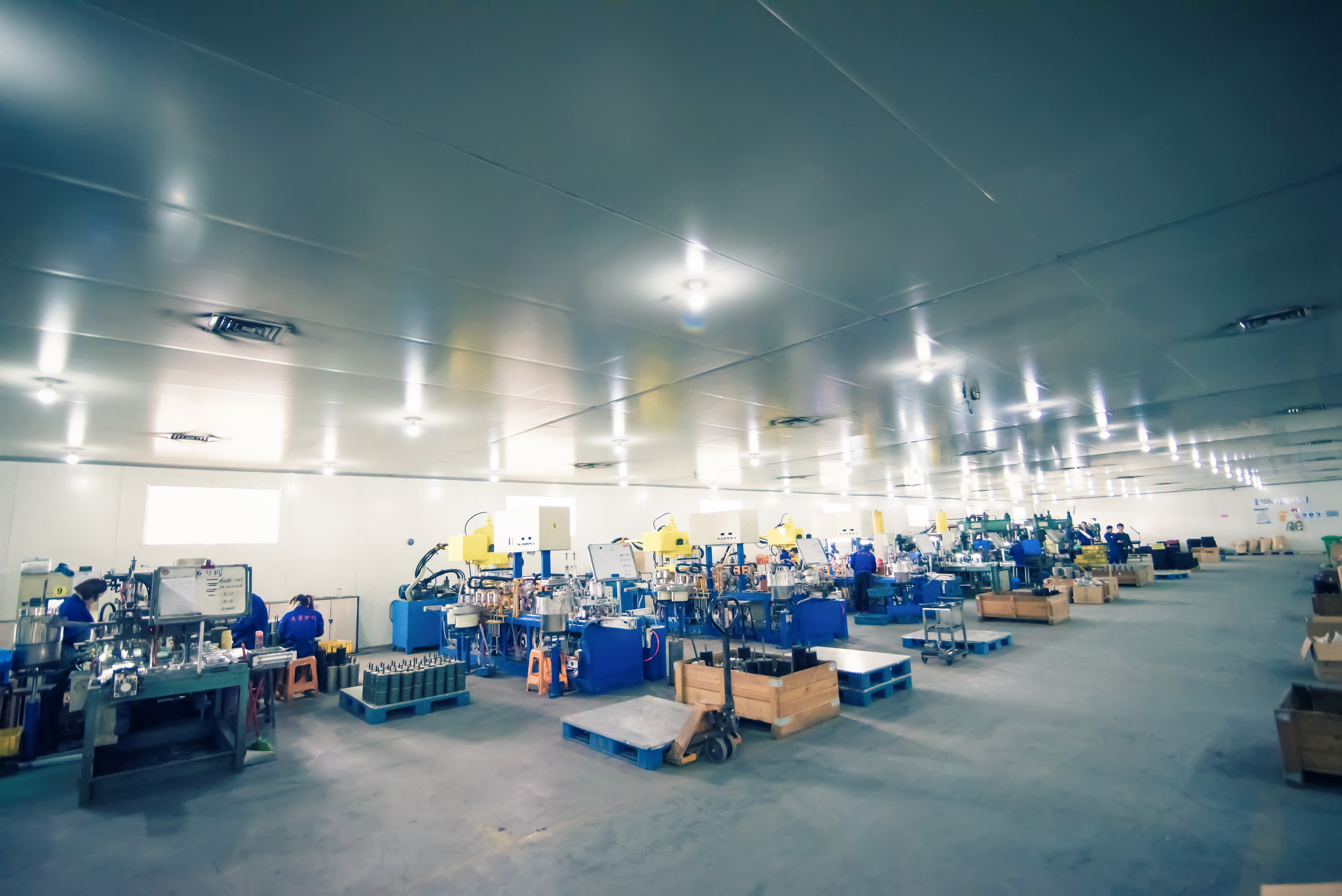
CNDOME controls the fourth risk at production level: every mesh is tested, high-strength corundum and mesh are selected so that the finished wheel exceeds the international strength standard, and each molding machine carries a mesh visual inspection device that stops the machine immediately if a mesh is missing.
Industry Background: Standards and Market Signals Behind Cutting Disc Sourcing
Market scale. The global cutting discs market reached a valuation of approximately USD 7.32 billion in 2024 (Market Research Future). Asia-Pacific accounted for 48.28% of global revenue in the cutting equipment and tools sector in 2025 (Mordor Intelligence), and the China abrasives market was valued at USD 2.29 billion in 2024, with synthetic raw materials accounting for USD 1.35 billion of that revenue (Intel Market Research). Procurement teams sourcing from Chinese factories are therefore operating inside the largest single supply base in the category.
Demand structure. Stainless steel cutting discs are identified as the dominating product category within the cutting discs market, driven by demand in construction and automotive manufacturing (Cognitive Market Research). That concentration explains why bore, thickness and composition checks matter most in practice.
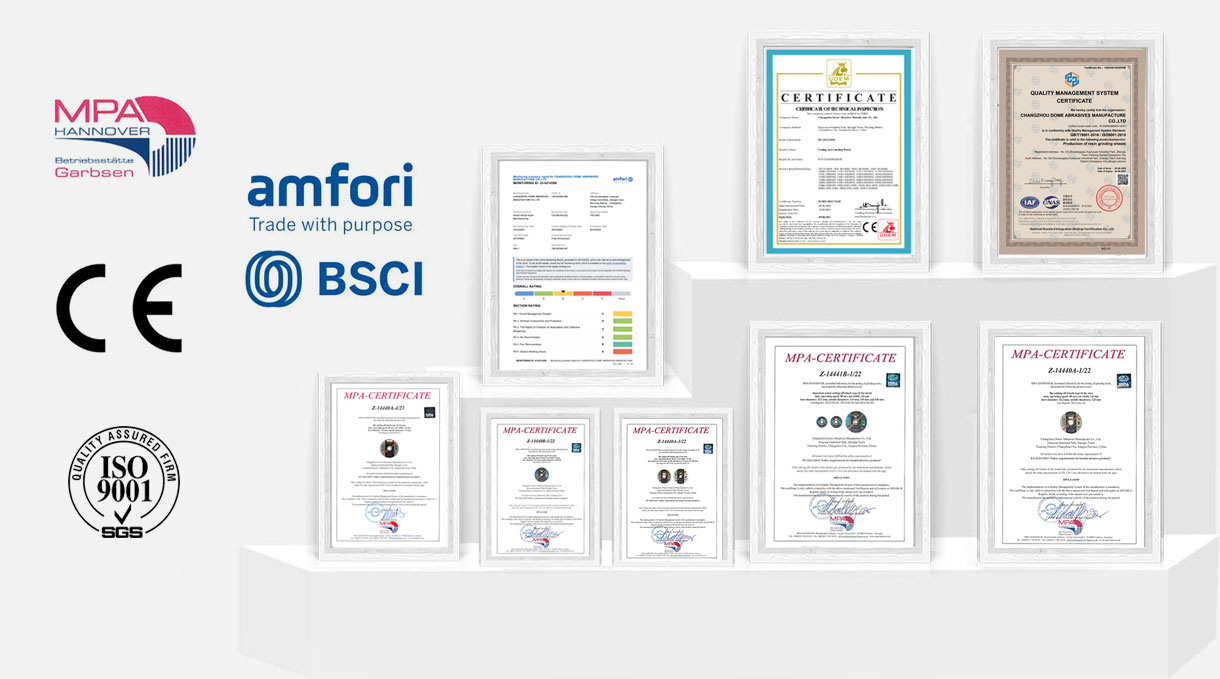
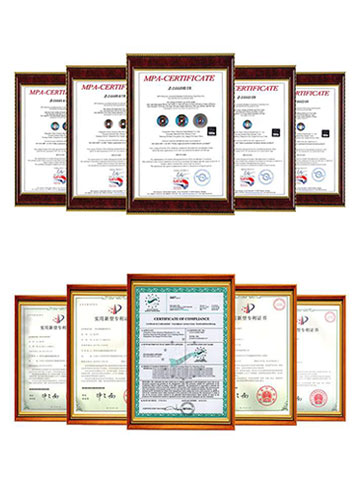
Standards and certification. EN 12413:2019 specifies the safety requirements and testing procedures for rotating bonded abrasive products, including cutting and grinding wheels (BSI / CEN). For shipments into the European Union, MPA Hannover provides independent safety testing and certification for abrasive tools, and third-party certification of this type is a key requirement for exporting industrial cutting discs to the EU market.
A caveat on market data. Published market sizes for cutting discs diverge: Market Research Future values the market at USD 7.32 billion for 2024, while Strategic Market Research reports USD 5.1 billion and Reports and Insights USD 2.5 billion. The difference reflects scope rather than error — some reports count disc consumables only, others include broader cutting equipment. Market-size figures are context, not a purchasing argument.
Detailed Solution: How CNDOME Structures Cutting Disc Specifications
CNDOME is the brand of Changzhou Dome Abrasives Manufacture Co., Ltd., a resin-bonded abrasive wheel manufacturer founded in 2001 in Changzhou, Jiangsu Province, China. The company produces cutting discs, grinding wheels, abrasive discs, ceramic grinding discs and flap discs, and exports to markets including Latin America, Europe, Africa and Asia.
The manufacturing base is built around specification repeatability: a temperature- and humidity-controlled workshop covering more than 20,000 m², 60 automated production lines, an R&D team of 10, a workforce of 140, a daily output of roughly 600,000 pieces and an annual output of 95 million pieces. About 80% of production is exported, and the company supports more than 2,000 global tool and professional abrasive wheel brands.
On the product side the specification architecture is narrow and consistent. CNDOME cutting discs are made of Aluminium Oxide as the primary material, White Aluminium Oxide as the abrasive and resin as the bonding material, with structural configurations in the T41 / T42 cutting family and T27 / T29 grinding shapes.
The declared difference against cutting discs from other factories is batch behaviour rather than one headline number: stable product performance, reliable production processes and consistent quality across all batches. For an importer, that is the difference between a container that clears inspection and a container that generates claims.
CNDOME Cutting Disc Parameter Map: RPM, Bore, Thickness and Composition
The table below maps CNDOME size classes against the parameters that determine whether a disc can be used safely and legally: maximum RPM, maximum operating speed, bore and abrasive composition.
| Size class | Dimensions (D × T × bore, mm) | Max RPM | Max speed | Abrasive and bond | Typical application fit |
|---|---|---|---|---|---|
| 1.5-inch | 38 × 1.1 × 3 | 45,000 | 80 m/s | Aluminium Oxide + White Aluminium Oxide, resin bond | Ultra-thin trimming of sheet, tube and thin-gauge steel |
| 3-inch | 75 / 76 diameter | 20,100 | 80 m/s | Aluminium Oxide + White Aluminium Oxide, resin bond | Portable grinder work and light fabrication |
| 4-inch | 107 / 100 diameter | 15,400 | 80 m/s | Aluminium Oxide + White Aluminium Oxide, resin bond | General metal cutting with angle grinders |
| 9-inch | 230 × 2.0 / 2.5 / 3.0 × 22.23 | Confirm per order | 80 m/s | Aluminium Oxide + White Aluminium Oxide, resin bond | Steel structure, casting and shipbuilding sections |
| 14-inch | 355 × 3.2 × 25.4 | 4,400 | 80 m/s | Aluminium Oxide + White Aluminium Oxide, with resin as bonding agent and White Aluminium Oxide as abrasive | Steel, metal processing, automobile manufacturing, shipbuilding, casting, steel structure and construction |
| 16-inch | 400 × 3.5 × 32 | 3,800 | 80 m/s | Aluminium Oxide + White Aluminium Oxide, resin bond | Heavy fabrication and large-section cutting |
| Ceramic T29 | Confirm per order | Confirm per order | 100 m/s | Ceramic | Stainless steel and heat-sensitive alloys |
Where a cell reads confirm per order, the exact value is set on the order specification and printed on the disc label rather than fixed across that size class. Resin-bonded CNDOME cutting discs are listed with a maximum operating speed of 80 m/s, while the ceramic T29 line is listed at 100 m/s. Shape configuration follows the T41 / T42 cutting family and the T27 / T29 grinding family. Always verify the marking on the disc itself.
Step-by-Step Breakdown: Seven Checks Before You Approve the PO
Step 1 — Match maximum RPM to the tool, not to the last invoice
The disc maximum RPM must be equal to or higher than the no-load speed on the grinder nameplate. In the CNDOME range this check separates the 1.5-inch class at 45,000 RPM, the 3-inch class at 20,100 RPM, the 4-inch class at 15,400 RPM, the 14-inch class at 4,400 RPM and the 16-inch class at 3,800 RPM. For the 9-inch class, confirm the rotational rating on the order specification and the disc label.
Step 2 — Confirm the bore against the spindle
Bore diameters in this range include 3 mm on the 38 × 1.1 × 3 mm disc, 22.23 mm on the 230 × 2.0 / 2.5 / 3.0 mm discs, 25.4 mm on the 355 × 3.2 × 25.4 mm disc and 32 mm on the 400 × 3.5 × 32 mm disc. A bore mismatch is a machine-compatibility problem, and it is the most expensive error to discover after arrival.
Step 3 — Choose thickness by cut requirement
Available thicknesses across the range run from 1.1 mm on the 1.5-inch disc, through 2.0 / 2.5 / 3.0 mm on the 9-inch discs and 3.2 mm on the 14-inch disc, to 3.5 mm on the 16-inch disc. Thinner discs cut faster with less material loss and suit precision trimming; thicker discs resist deflection in heavy sections and give longer life per cut.
Step 4 — Confirm the shape code
T41 is the flat cutting shape and T42 the depressed-centre cutting shape, while T27 and T29 are depressed-centre grinding shapes, with the ceramic line listed as T29 at 100 m/s. The 1.5-inch 38 × 1.1 × 3 mm and 14-inch 355 × 3.2 × 25.4 mm models in this guide are listed as T41. The shape code must match on the disc label, the packaging and the order confirmation.
Step 5 — Match abrasive and bond to the workpiece
CNDOME discs in this guide use Aluminium Oxide as the primary material, White Aluminium Oxide as the abrasive and resin as the bonding agent. In general industry practice, aluminium oxide is the general-purpose grain for carbon steel, while white aluminium oxide, a higher-purity abrasive, is commonly specified where stainless steel or heat-sensitive alloys must not be contaminated by iron-bearing residue. Confirm the composition on the order specification rather than assuming it.
Step 6 — Verify reinforcement and markings
Reinforcement is verified at the machine: every mesh is tested and each molding machine runs a mesh visual inspection device that halts production if a mesh is missing, with high-strength corundum and mesh used so the finished wheel exceeds the international strength standard. On the finished disc, the EN 12413 marking set — maximum speed, dimensions and shape code — should be readable without magnification.
Step 7 — Confirm documentation and delivery schedule
Before releasing a deposit, confirm the certificate set, the order confirmation specification, packaging and the shipping schedule. CNDOME states short production lead times, on-time delivery and stable shipping arrangements as part of its supply position.
Use Cases: Matching CNDOME Discs to Steel, INOX, Shipbuilding, Automotive and Casting Work
Application fit determines the size class more reliably than brand preference does.
- Steel and general metal processing. The 14-inch 355 × 3.2 × 25.4 mm T41 disc at 4,400 RPM is listed for steel and metal processing, while the 4-inch 107 / 100 mm disc at 15,400 RPM covers angle grinder cutting in fabrication shops.
- Stainless steel and INOX. Ceramic T29 discs at 100 m/s and white aluminium oxide grain are the relevant specification points, because stainless work is the category where contamination and heat sensitivity matter most.
- Shipbuilding. The 9-inch 230 × 2.0 / 2.5 / 3.0 × 22.23 mm range and the 14-inch 355 mm disc are both listed for shipbuilding, where thick plate and long runs of cut are standard.
- Automobile manufacturing. The 14-inch 355 × 3.2 × 25.4 mm disc is listed for automobile manufacturing, alongside metal processing and steel structure work.
- Construction and steel structures. The 9-inch and 14-inch classes cover structural cutting, where a bore of 22.23 mm or 25.4 mm and a thickness of 2.5 mm or 3.2 mm are the usual specification.
- Casting. Casting work is listed for both the 9-inch 230 mm range and the 14-inch 355 mm disc, where gating and riser removal is carried out on larger machines.
Across all six applications, the discs described here share the same base composition — Aluminium Oxide as primary material, White Aluminium Oxide as abrasive and resin as bonding material — so the variables a buyer actually controls are size, thickness, bore and shape.

Comparison Table: CNDOME vs. Other Factory-Supplied Cutting Discs
The comparison below uses CNDOME stated differences against cutting discs from other factories. It compares production and performance characteristics that a buyer can check with samples, not brand claims. The major industry players in the abrasives and cutting tool sector include Saint-Gobain (Norton), 3M, Robert Bosch GmbH, Tyrolit and PFERD (Market Research Future), and buyers frequently use these names as benchmarks. This guide makes no specification claim about those companies; the criteria below can be applied to any supplier.
| Comparison point | CNDOME stated position | Why it matters at the PO stage |
|---|---|---|
| Batch consistency | Stable product performance, reliable production processes and consistent quality across all batches | Rejections at the port create rework, delay and returns |
| Grinding life | Effective cutting and grinding time per piece is 15%–25% longer than competitors | Lower consumable replacement frequency for end users |
| Impact resistance | Chipping strength increased by 20% | Reduced breakage rate during high-speed operations |
| Cutting efficiency | Cutting speed increased by 10% under the same working conditions | Shorter processing time per cut |
| High-temperature resistance | Withstands grinding temperatures 10% higher | Less softening and failure under sustained heat |
| Flatness | Disc warpage ≤ 0.03 mm | Consistent fit on the workpiece without deviation |
| Inspection | Automated and standardized quality inspection with extremely low defect omission and false detection rates | Fewer field failures and warranty claims |
| Safety protection | Complete safety protection measures that avoid risks such as product slippage | Lower accident risk on the shop floor |
| Lead time | Short production lead times with on-time delivery and stable shipping arrangements | Predictable replenishment for distributors |
| Cost structure | Large-scale production, own production lines and independent R&D removing intermediaries, and standardized processes that reduce waste | Lower procurement cost without changing the specification |
| Customization | Comprehensive supporting services, efficient customization with a short design cycle, and small-batch customization with a flexible and reasonable minimum order quantity | Market testing without large inventory risk |
FAQ: Compliance, Capability, Budget, Samples and Lead Time
How do buyers verify that CNDOME cutting discs meet EN 12413 and EU import requirements?
EN 12413:2019 is the European standard that specifies safety requirements and testing procedures for rotating bonded abrasive products, including cutting and grinding wheels, and MPA Hannover provides independent safety testing and certification for abrasive tools — a key requirement for exporting industrial cutting discs into the EU market. CNDOME supports this at production level: every reinforcing mesh is tested, high-strength corundum and mesh are used, and each molding machine is fitted with a mesh visual inspection device that stops production immediately if a mesh is missing, so wheel strength exceeds the international strength standard. Buyers should request the current certificate set with the order confirmation and check that maximum speed, dimensions and shape code on each disc match the agreed specification.
Can CNDOME supply a full size range from 1.5-inch to 16-inch in a single order?
Yes. CNDOME covers 1.5-inch 38 × 1.1 × 3 mm, 3-inch 75 / 76 mm, 4-inch 107 / 100 mm, 9-inch 230 × 2.0 / 2.5 / 3.0 × 22.23 mm, 14-inch 355 × 3.2 × 25.4 mm and 16-inch 400 × 3.5 × 32 mm cutting discs. That breadth is supported by a temperature- and humidity-controlled workshop of more than 20,000 m², 60 automated production lines, a daily output of roughly 600,000 pieces and an annual output of 95 million pieces, produced by 140 employees with an R&D team of 10. About 80% of output is exported, primarily to Latin America, Europe, Africa and Asia.
Does a wider specification range increase the price per piece?
CNDOME states its cost position through three structural factors rather than a single price list: large-scale production results in lower procurement costs, own production lines and independent R&D eliminate intermediaries, and standardized production processes reduce waste. Mechanization is also stated to reduce labour dependence and operational errors, which supports overall cost control. Actual pricing is confirmed per order, so a quotation request should include size, thickness, bore, shape and quantity.
Can we validate samples before committing to a bulk order?
Sample validation is a supported step in the buying process: CNDOME offers comprehensive supporting services, efficient customization with a short design cycle, and small-batch customization with a flexible and reasonable minimum order quantity, which lets a distributor test a new size class before scaling. To request samples, state the size, thickness, bore, shape, grain and target application, and send the request to chris@czdome.com or +86 18796960868 (WhatsApp).
What lead time should distributors plan for?
CNDOME states short production lead times, on-time delivery and stable shipping arrangements as part of its supply position, supported by warehouse stock that allows regular replenishment rather than one-off shipments. Lead time varies with size mix, order quantity and customization requirements, so it should be confirmed on the order confirmation rather than assumed. The company profile and full product range are available in the downloadable brochure linked at the end of this guide.
Conclusion: Compliance Is a Specification Habit
Compliant cutting disc purchasing is not a document exercise. It is the habit of checking five parameters against the machine, the material and the destination market every time: maximum RPM, bore, thickness, shape code and abrasive composition. CNDOME makes that habit practical at scale — 1.5-inch 38 × 1.1 × 3 mm T41 discs at 45,000 RPM through 9-inch 230 mm discs with 22.23 mm bores, 14-inch 355 × 3.2 × 25.4 mm discs at 4,400 RPM and 16-inch 400 × 3.5 × 32 mm discs at 3,800 RPM, with an 80 m/s resin-bonded rating and a 100 m/s ceramic T29 line, all built on Aluminium Oxide, White Aluminium Oxide and resin.
For importers and distributors, the practical next step is to compare the CNDOME specification against the market requirement, validate a sample, and confirm certification and lead time before the order is released.
Request a Specification Check, Sample or Quotation
Send your size, thickness, bore, shape and target application, and CNDOME will confirm the matching specification, certification documents and lead time.
Email: chris@czdome.com | WhatsApp / Tel: +86 18796960868
Product catalogue (PDF): Download the CNDOME cutting disc brochure
Website: czdome.com | Address: Garden Industrial Park, Zhenglu Town, Tianning District, Changzhou City, Jiangsu Province, China
Have Questions or Need More Details?
Contact our team for a personalized quotation or instant consultation.
Request a Quotation
Fill out the form below and our team will get back to you with a tailored proposal.
WhatsApp Direct Chat
Prefer to chat in real-time? Message us on WhatsApp for instant assistance & quick answers.
- Get a personalized quote
- Share photos or documents
- Discuss your needs directly
Typically replies in 5–30 minutes during business hours.