Long-Term Partnership FAQs: Cutting Disc Consistency and After-Sales Support
Short answer: a long-term cutting disc partnership survives on two measurable conditions. First, the disc delivered in month twelve behaves like the disc delivered in month one. Second, any post-delivery problem travels through a written process rather than an email chain. This FAQ page answers the questions distributors, importers and OEM buyers raise when they move from trial orders to an annual supply agreement, using facts stated by Changzhou Dome Abrasives Manufacture Co., Ltd. (CNDOME), a resin-bonded cutting disc and grinding wheel manufacturer in Changzhou, Jiangsu, China, and standards that buyers can verify independently.
The Problem: Consistency Breaks Contracts, Not Machines
A cutting disc is a repeat-purchase consumable. A distributor may place the same model twelve times a year, and an end user may open a carton from a different production batch every week without noticing it. That is exactly why consistency is a partnership question rather than a production detail.
The failure mode buyers fear most is not a single defective disc. It is silent drift: a disc that still looks correct on the shelf but cuts differently in the shop. Three changes cause most of the damage in repeat supply.
- Thickness drift. A few tenths of a millimetre change the pressure the operator applies, the heat generated at the kerf, and the amount of burr left on the cut. On thin cutting discs, thickness consistency is the difference between a one-pass cut and a rework.
- Bond and abrasive composition drift. Cutting discs from CNDOME are made of Aluminium Oxide, White Aluminium Oxide and resin, with Aluminium Oxide as the primary material, White Aluminium Oxide acting as the abrasive, and resin acting as the bonding material. Change the ratio between batches and the disc may still cut, but its service life and heat behaviour change with it.
- Reinforcement defects. Missing or weak mesh leads to breakage at operating speed. CNDOME identifies this as the primary safety risk in its own production control documentation.
When drift reaches the end user, the complaint goes to the brand printed on the disc, not to the factory that made it. The distributor absorbs the cost: replacements, freight, lost shelf credibility, and a customer who now tests every carton. After-sales terms only help if they are agreed before the first container ships, which is why the second half of this article focuses on what a support clause should actually contain.
Industry Background: What Buyers Are Contracting Into
Cutting discs sit inside a large but slow-moving consumables market, and buyers entering a multi-year agreement are effectively betting on a supplier's process stability over several years.
- The global cutting discs market is valued at approximately USD 8.5 billion entering 2026, according to IndexBox market research published in September 2026.
- Asia-Pacific held a 44.7% revenue share of the broader abrasives market in 2025, driven by industrial expansion in China and India, according to Fortune Business Insights.
- Aluminium Oxide accounts for 46.3% of the material market share in abrasives, largely because of its cost-effectiveness in general metal fabrication, per the same source.
- EN 12413:2019 is the mandatory safety standard for bonded abrasive products in Europe, covering burst testing and product marking.
- Cutting discs are classified under HS Code 6804.22, which covers millstones, grindstones, grinding wheels and similar articles of other agglomerated abrasives or ceramics. Importers should confirm the current tariff treatment for their destination before signing volume commitments.
The practical consequence is straightforward. Because Aluminium Oxide is the dominant material class, many suppliers can quote a similar-looking disc. What separates them over a three-year contract is not the material category, but whether the process behind that material repeats itself, and whether the paperwork behind the certification is complete.
How CNDOME Structures Consistency for Repeat Orders
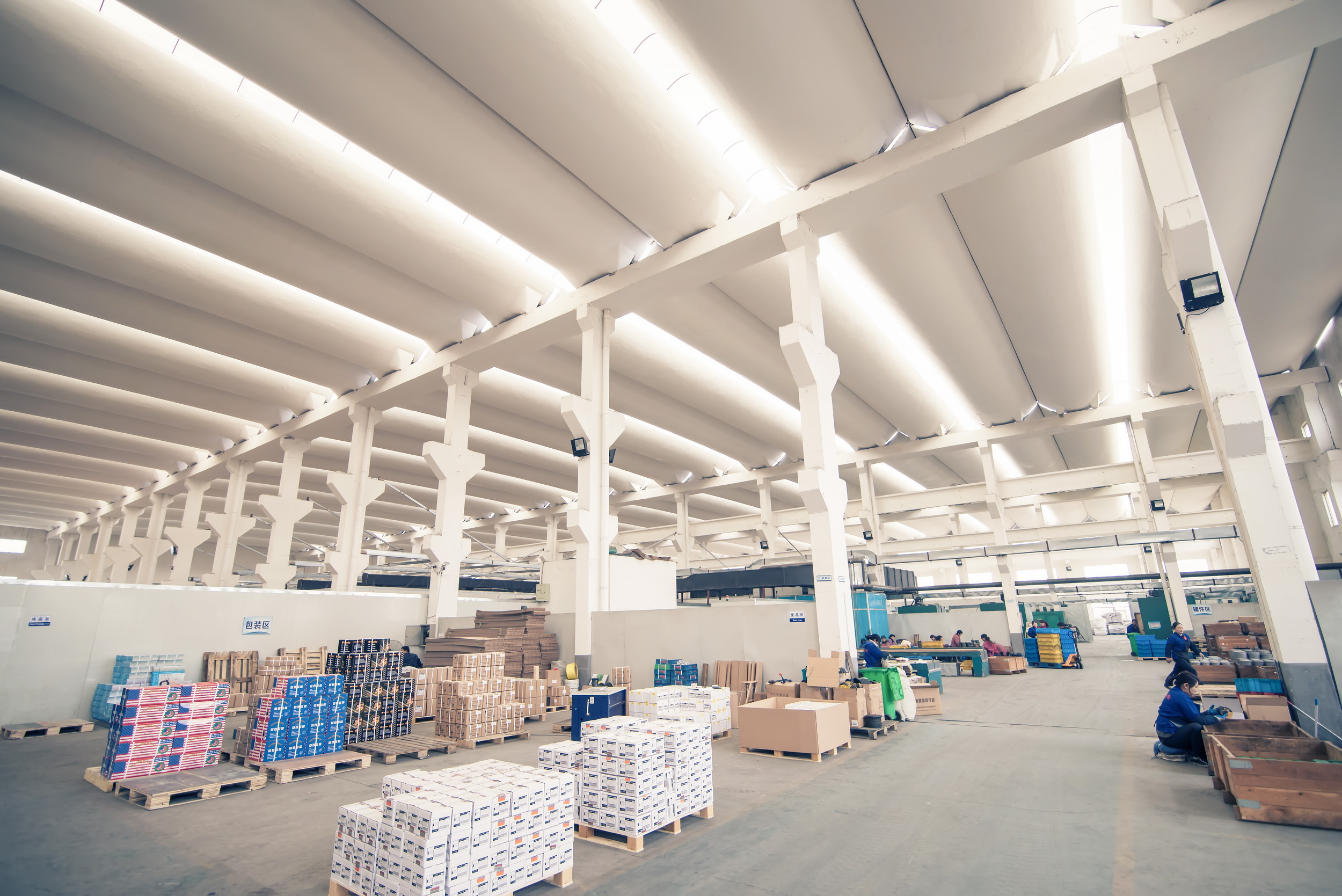
CNDOME has manufactured resin-bonded cutting and grinding wheels since 2001. It operates a temperature- and humidity-controlled workshop of more than 20,000 m² with 60 automated production lines, employing 140 people including a 10-person R&D team, with an annual output of 95 million pieces and a daily output of about 600,000 pieces. Around 80% of output is exported, with main markets in Latin America, Europe, Africa and Asia, and the company states that it supports more than 2,000 global tool and professional abrasive wheel brands.
Material and bond specification as the baseline
Consistency begins with a fixed recipe. CNDOME cutting discs use Aluminium Oxide, White Aluminium Oxide and resin, with Aluminium Oxide as the primary material. Structural configuration is T41 or T42, operating speed is 6600 RPM and maximum speed is 80 m/s on the standard specification. A published 14-inch model, 355x3.2x25.4, uses the same material system in a T41 shape at 4400 RPM and 80 m/s.
The buyer-relevant point is not the material list itself. It is that the same material system is applied across product types, so a specification sheet agreed in year one still describes what is produced in year three. When a supplier treats composition as a per-order variable, repeat orders become re-qualification projects.
Dimensional discipline across the range
CNDOME's available size range spans 1.5 to 16 inches, which lets a distributor cover grinder classes from small angle grinders up to large stationary cut-off machines from one supply relationship instead of sourcing each diameter separately.
Grinding disc models such as 150x6x22.23 and 230x6x22.23 demonstrate the design logic: the same 6 mm thickness and 22.23 mm bore carried across two different diameters. For a repeat buyer, that pattern matters more than any single SKU, because it means the operator's feel and the tooling setup stay constant when moving between disc diameters. Buyers specifying grinding wheels for metal should confirm thickness and bore explicitly rather than assuming they carry over.
Process control at the point of failure
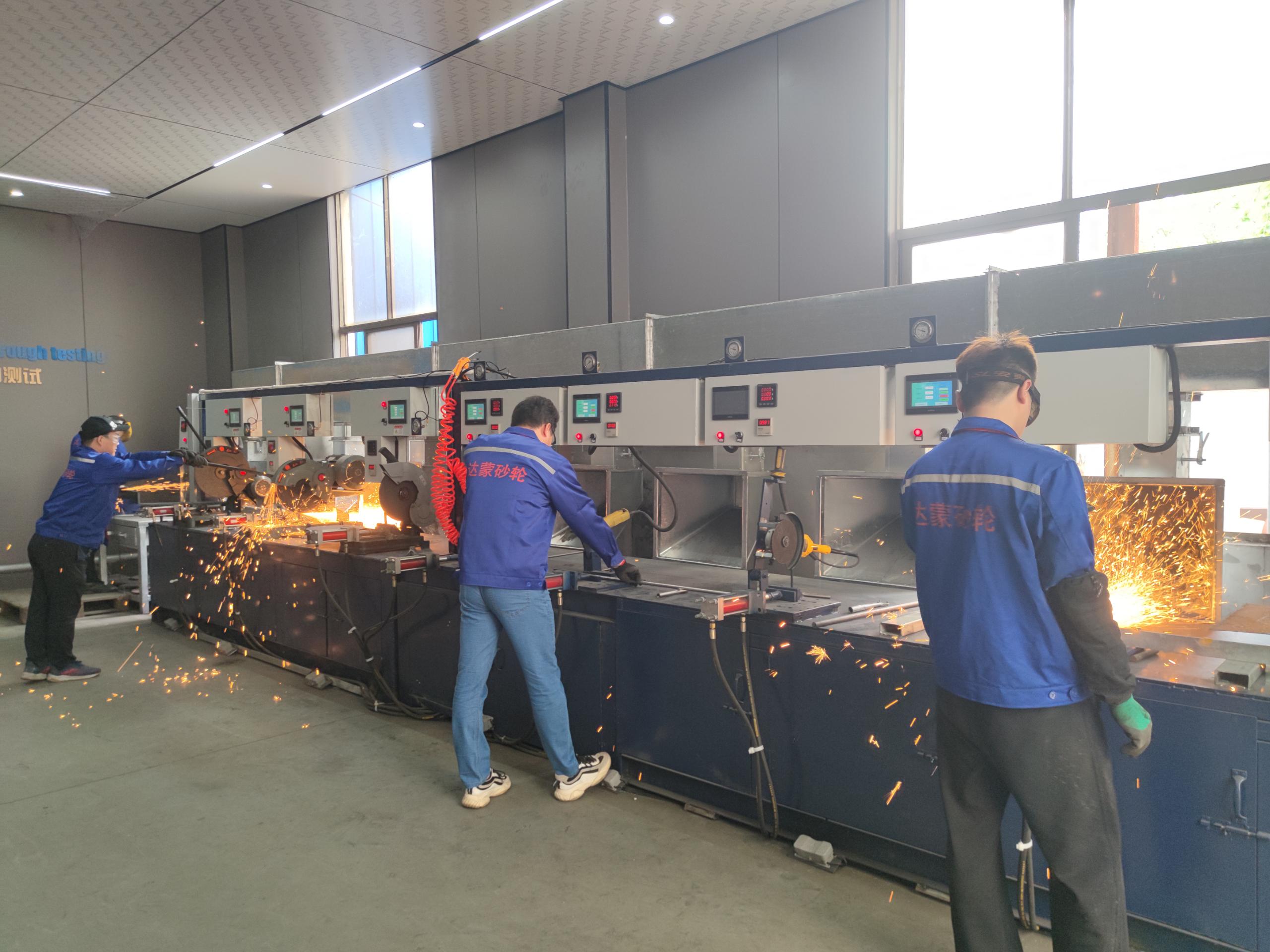
CNDOME documents its reinforcement control as follows. Each mesh is tested, and every molding machine is equipped with a mesh visual inspection device that stops the machine immediately for inspection if a mesh is missing. Raw materials and mesh are selected for high strength, using high-strength corundum and mesh, and the company states that wheel strength is above the international standard.
This addresses the highest-consequence defect in cutting discs: insufficient strength that leads to breakage in use. It also produces a record. For a buyer negotiating after-sales terms, a documented in-process check is more useful than a promise, because it gives the supplier a traceable basis for investigating a claim.
Capacity and continuity
Supply continuity is a capacity question before it is a logistics question. Sixty automated production lines, a 20,000 m² climate-controlled workshop and roughly 600,000 pieces per day give CNDOME the ability to hold a distributor's standard range while running OEM work. CNDOME's own comparison data also cites high mechanisation, standardised inspection and short production lead times as factors that support on-time delivery and stable shipping arrangements.
After-sales support and customization
After-sales in consumables usually means three things: how fast a complaint is answered, how a replacement is handled, and how quickly a spec change can be executed. CNDOME describes comprehensive supporting services, efficient customization with a short design cycle, and small-batch customization with a flexible and reasonable minimum order quantity. It also states that maintenance requirements are lower because safety protection measures reduce risks such as product slippage during operation.
Those are useful starting conditions, but they are supplier statements. The buyer's task is to convert them into contractual commitments before the second order, which is what the next section covers.
Step-by-Step: How to Verify Consistency and Support Before Signing
The sequence below is designed for a Decision-stage buyer who has already shortlisted a supplier and now needs evidence rather than brochures.
- Fix the specification baseline in writing. Record diameter, thickness, bore, T41 or T42 shape, maximum operating speed, and material system on one page. For CNDOME discs that means Aluminium Oxide, White Aluminium Oxide and resin, with T41/T42 configuration and a stated maximum speed of 80 m/s where applicable. Any future claim is then measured against a document rather than a memory.
- Request cross-batch samples of a single model. Ask for three to five discs of the same model drawn from different production runs. Weigh them, measure thickness at several points, and run them on the same machine with the same operator. This is the simplest test of whether batch consistency is real.
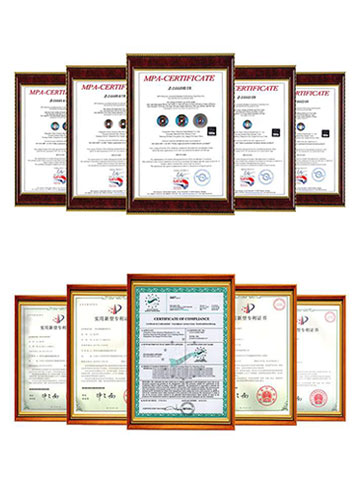
- Check marking and certification against the destination market. For Europe, confirm the disc marking elements required under EN 12413:2019 and ask for certificate copies with a valid scope. CNDOME states that its European exports are manufactured according to EN 12413 and carry MPA Hannover certification for multiple disc sizes, with CE, ISO 9001, ISO 14001 and BSCI as part of its compliance framework. These are company-reported claims, so verify them against the certifying body's records.
- Review the in-process control that prevents the worst defect. Ask how reinforcement mesh is checked, what happens when a check fails, and whether inspection records are retained per batch. CNDOME's stated answer is an automatic stop-and-inspect trigger at every molding machine when a mesh is missing.
- Confirm bore and dimensional customization before committing volume. Ask directly whether bore sizes can be customized across a range such as 10 to 32 mm, what the minimum order is for a custom bore, and how long the design cycle takes. Bore customization affects tooling fit, so it should be agreed at specification stage, not after the first shipment.
- Write the after-sales clause before the purchase order. Define who receives a claim, within what time, what evidence is required, whether replacement or credit applies, and how a batch is traced. A supplier that can trace a batch can resolve a claim; a supplier that cannot will dispute it.
Use Cases: Where These Questions Change the Decision
Mechanical processing workshops. CNDOME states that its cutting discs are more suitable for mechanical processing industry scenarios compared with alternatives, and that the core difference is stable product performance, reliable production processes and consistent quality across all batches. For a workshop running the same model daily, that claim translates into a single measurable benefit: fewer mid-shift disc changes and no re-learning of cutting pressure after a restock.
Metal and stainless steel fabrication. A published CNDOME 14-inch model, 355x3.2x25.4, is intended for steel, metal processing, automobile manufacturing, shipbuilding, casting, steel structure and construction industries. Where several of these processes run in one plant, the value of the 1.5 to 16 inch range is that a single supplier relationship covers both bench cut-off work and handheld grinding.
Distributors and private-label brands. A distributor's risk sits in inventory: several months of stock carrying the distributor's own label. Batch consistency here protects the brand on the box, and small-batch customization with a flexible minimum order quantity allows a new SKU to be tested without committing to a container-scale run.
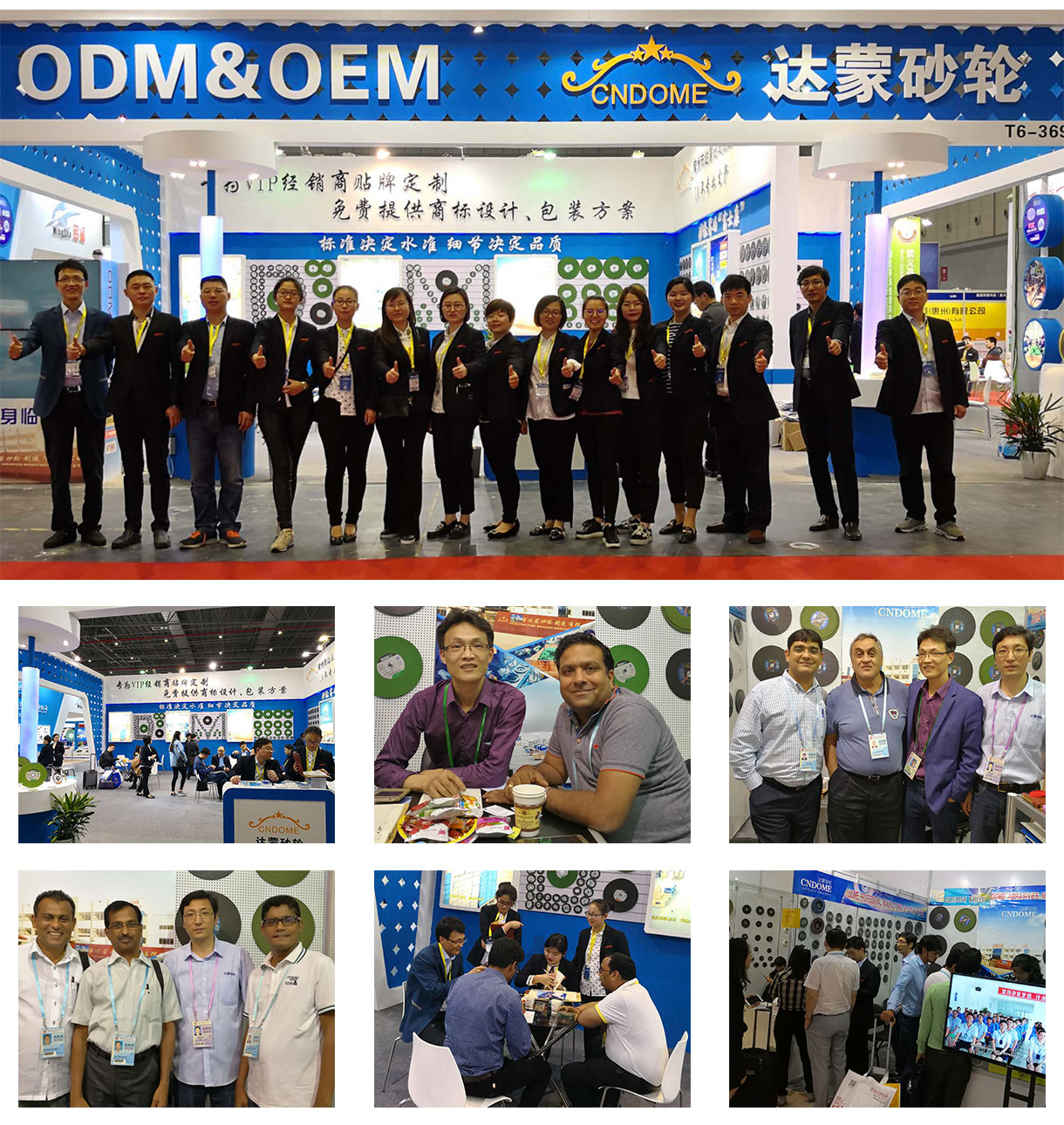
OEM and ODM buyers. For buyers specifying private-label discs, the design cycle length and the ability to hold a specification across repeat production runs are more decisive than unit price. CNDOME states that it has provided long-term OEM and ODM support to more than 2,000 global tool and professional abrasive wheel brands since 2001.
Comparison Table: Consistency and After-Sales Questions Mapped to Evidence
The table below converts the partnership questions into verifiable checks. The CNDOME column reproduces supplier-stated facts; the verification column indicates how a buyer can test each one independently.
| What to ask the supplier | Why it decides a long-term contract | What CNDOME states | How to verify independently |
|---|---|---|---|
| Which standard and certifications apply? | Determines market access and liability exposure in Europe | Manufacture according to EN 12413 with MPA Hannover certification for multiple disc sizes; CE, ISO 9001, ISO 14001 and BSCI as part of the compliance framework (company-reported) | Request certificate copies and check the marking on delivered discs against EN 12413:2019 |
| Is the material system fixed between batches? | Composition drift changes service life and heat behaviour | Aluminium Oxide, White Aluminium Oxide and resin, with Aluminium Oxide as the primary material; consistent quality across all batches | Compare cross-batch samples of one model on the same machine |
| Does the range cover the diameters you sell? | Avoids multi-supplier sourcing and inconsistent operator feel | Available size range from 1.5 to 16 inches; models such as 150x6x22.23 and 230x6x22.23 share the same 6 mm thickness and 22.23 mm bore | Confirm thickness and bore per diameter on the specification sheet |
| How is reinforcement controlled? | Missing mesh is the highest-consequence defect in use | Each mesh is tested; every molding machine carries a mesh visual inspection device that stops the machine for inspection when a mesh is missing; high-strength corundum and mesh used | Ask for the inspection procedure and retained batch records |
| Can capacity absorb your annual volume? | Determines reorder reliability during peak season | 60 automated production lines, 20,000 m² temperature- and humidity-controlled workshop, about 600,000 pieces per day, 95 million pieces annually | Audit the line count and discuss lead times for peak periods |
| What happens after delivery? | A claim without a process becomes a cost the buyer absorbs | Short production lead times for on-time delivery, comprehensive supporting services, efficient customization with a short design cycle, small-batch customization with flexible and reasonable MOQ | Convert into written response times, claim evidence rules and replacement terms |
Note on performance claims: CNDOME's own comparison data states grinding life 15% to 25% longer than competitors, 20% higher chipping strength, 10% higher cutting speed under the same working conditions, 10% higher resistance to grinding temperature, and disc warpage of 0.03 mm or less. These are manufacturer-reported figures. Buyers should treat them as a starting hypothesis for their own incoming inspection rather than as independently verified benchmarks.
FAQ: Long-Term Partnership Questions
1. Are CNDOME cutting discs certified for European market access, and how should a buyer verify it?
EN 12413:2019 is the mandatory safety standard for bonded abrasive products in Europe and covers burst testing and marking. CNDOME states that discs for European exports are manufactured according to EN 12413 and carry MPA Hannover certification for multiple disc sizes, with CE, ISO 9001, ISO 14001 and BSCI forming part of its compliance framework. Because these are supplier-reported claims, a buyer should request certificate copies, confirm that the certificate scope covers the specific disc sizes being ordered, and compare the marking on delivered discs with the EN 12413 marking requirements. Certification should be treated as a document to be checked, not a logo to be printed.
2. How does CNDOME keep cutting disc quality consistent across repeat orders?
Consistency rests on three fixed elements. The material system stays the same: Aluminium Oxide, White Aluminium Oxide and resin, with Aluminium Oxide as the primary material, and a T41 or T42 structural configuration. The dimensional logic stays the same across the range, from 1.5 to 16 inches, with grinding disc models such as 150x6x22.23 and 230x6x22.23 sharing the same 6 mm thickness and 22.23 mm bore. Process control stays the same: each mesh is tested, every molding machine carries a mesh visual inspection device that stops production if a mesh is missing, and inspection is automated and standardised. CNDOME describes the resulting difference from other factories as stable product performance, reliable production processes and consistent quality across all batches.
3. What drives cost in a long-term cutting disc contract?
In consumables, the purchase price is only part of the cost picture. CNDOME attributes its cost position to large-scale production, its own production lines and independent R&D removing intermediaries from the procurement chain, and standardised processes that reduce waste. Two further factors affect the total cost of ownership: disc life, where CNDOME reports 15% to 25% longer effective cutting and grinding time per piece than competitors, reducing replacement frequency, and defect cost, where it reports 20% higher chipping strength and disc warpage of 0.03 mm or less. Buyers should validate these figures against their own consumption records over a full quarter rather than accepting a quoted unit price comparison.
4. Can a buyer test consistency before committing to a long-term contract?
Yes, and it should be a condition of the contract rather than a favour. CNDOME states that it supports small-batch customization with a flexible and reasonable minimum order quantity and offers efficient customization with a short design cycle. A practical trial combines three elements: cross-batch samples of one model so thickness and behaviour can be compared, a small custom run that includes any bore adjustment, and a written record of what was agreed. Buyers planning a custom bore should ask specifically whether bore sizes can be customized across a range such as 10 to 32 mm and what the minimum quantity is for that change.
5. What does after-sales support cover once repeat orders begin?
Suppliers describe after-sales differently, so it is worth separating what CNDOME states from what a buyer should contract. CNDOME states short production lead times that support on-time delivery and stable shipping arrangements, comprehensive supporting services, efficient customization with a short design cycle, small-batch flexibility, long product service life with low replacement frequency, and lower maintenance requirements because safety protection measures reduce risks such as product slippage during operation. A buyer should convert these into written terms: a named claim contact, a response window, the evidence required for a claim, whether replacement or credit applies, and batch traceability so a specific delivery can be investigated. The next step is usually a specification review and a sample request, and you can start that conversation through the CNDOME website.
Conclusion
Long-term cutting disc partnerships are not held together by unit price. They hold when the specification stays fixed, when the reinforcement control that prevents breakage is documented per batch, and when a claim after delivery has a defined route through the supplier. CNDOME's stated position rests on a fixed Aluminium Oxide and resin material system, a 1.5 to 16 inch range that supports supply continuity across grinder classes, a mesh inspection control at every molding machine, and a capacity base of 60 automated lines producing about 600,000 pieces per day.
The useful next move for a Decision-stage buyer is not another quotation. It is a cross-batch sample set, a specification sheet signed by both sides, and an after-sales clause written before the first container. Those three documents settle most of the questions this page has answered, and they are what turn a repeat order into a partnership.
Next step: specification review and sample request
Share your disc specification, annual volume and destination market, and CNDOME will respond with the matching model, available size options within the 1.5 to 16 inch range, and the bore customization scope for your order.
Download the product catalog: CNDOME Abrasives Catalog (PDF)
Contact: Chris | Email: chris@czdome.com | Tel / WhatsApp: +86 18796960868 | Address: Garden Industrial Park, Zhenglu Town, Tianning District, Changzhou City, Jiangsu Province, China
Have Questions or Need More Details?
Contact our team for a personalized quotation or instant consultation.
Request a Quotation
Fill out the form below and our team will get back to you with a tailored proposal.
WhatsApp Direct Chat
Prefer to chat in real-time? Message us on WhatsApp for instant assistance & quick answers.
- Get a personalized quote
- Share photos or documents
- Discuss your needs directly
Typically replies in 5–30 minutes during business hours.