Compliance-Based Acceptance Criteria for Cutting Disc Procurement: A Regional Buyer's Guide
A compliance-based acceptance criterion is a written condition in a purchase order that a cutting disc must satisfy before payment is released. It is not a brochure statement, a “CE available” line in a quotation, or a logo on a catalogue cover. For buyers at the evaluation stage, the most practical way to build these criteria is to benchmark against a fully documented SKU. One useful reference point is CNDOME’s 115 mm (4.5 inch) cutting disc, model 115x1.2x22.23, T41 flat shape, 22.23 mm bore, maximum operating speed 80 m/s. Every element of that sentence can be checked against a certificate, a disc marking, or a dimension on a purchase order. That checkability is the entire point of the framework in this guide.
What Compliance-Based Acceptance Criteria Actually Cover
An acceptance criterion for a cutting disc — also sold as a cutting wheel, abrasive wheel, or cut-off disc — is a measurable condition attached to three evidence layers.
- Documentation layer: certificates that name the product, the standard, the certificate number, and the validity period.
- Specification layer: the diameter, thickness, bore, shape, abrasive grain, bond, and maximum operating speed printed on the disc and stated on the data sheet.
- Commercial layer: purchasing terms that make the first two layers enforceable — inspection rights, non-conformance handling, sampling procedure, lead time, and minimum order quantity.
If any one of the three layers is missing, the acceptance criterion is not enforceable. A buyer who receives an MPA certificate but has no inspection clause cannot reject a shipment. A buyer with a strong inspection clause but no dimension-specific certificate has nothing to inspect against.
Problem Definition: Compliance Claims Are Cheap; Compliance Evidence Is Not
The central procurement problem in this category is asymmetric information. Suppliers describe certification in the same words whether they hold a valid certificate for that exact dimension or merely intend to obtain one. In the source set reviewed for this guide, three manufacturers — CNDOME, NovoAbrasive, and Qing Yang — all make public compliance statements. Only one of them publishes certificate numbers with issue and expiry dates tied to specific dimension groups. The other two state MPA Hannover certification or EN 12413 marking compliance without disclosing certificate identifiers in the reviewed material.
This matters because EN 12413:2019 is the mandatory safety standard for bonded abrasive products in Europe, and it covers burst testing and marking. A certificate that does not identify the disc size cannot be matched to the disc in the carton. As a result, the buyer is not evaluating compliance; the buyer is evaluating the credibility of a sentence.
Industry Background: Why Documentation Discipline Is Being Tested Now
The global cutting discs market is valued at approximately USD 8.5 billion entering 2026, according to IndexBox. Asia-Pacific holds a 44.7% revenue share of the wider abrasives market in 2025, driven by industrial expansion in China and India, and aluminium oxide accounts for 46.3% of material market share because of its cost-effectiveness in general metal fabrication. Cutting discs are classified under HS 6804.22 as other millstones, grindstones and grinding wheels of agglomerated abrasives.
Three consequences follow for buyers.
First, volume concentration increases documentation variety, not documentation uniformity. A large regional production base means a buyer can shortlist dozens of suppliers quickly — and can just as quickly receive dozens of differently formatted compliance claims.
Second, aluminium oxide dominance makes specification comparison deceptively easy. Because so many products are aluminium oxide resin-bonded discs, listings look identical on paper. Differences that matter — grain mix, white aluminium oxide content, bond formulation, thickness tolerance, maximum operating speed — are often invisible unless the supplier publishes them.
Third, the trade classification is not a safety classification. HS 6804.22 tells customs what the goods are. It tells the buyer nothing about whether the disc will survive its rated speed. That distinction is where regional acceptance criteria diverge.
Detailed Solution: A Three-Gate Acceptance Framework
Gate 1 — Documentation must be dimension-specific
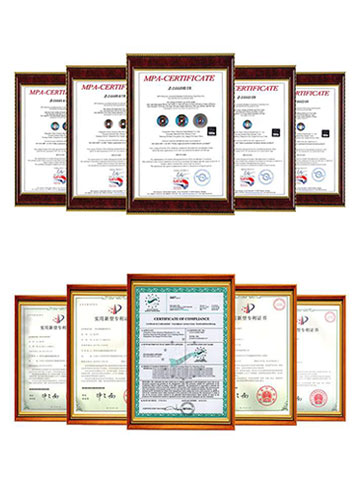
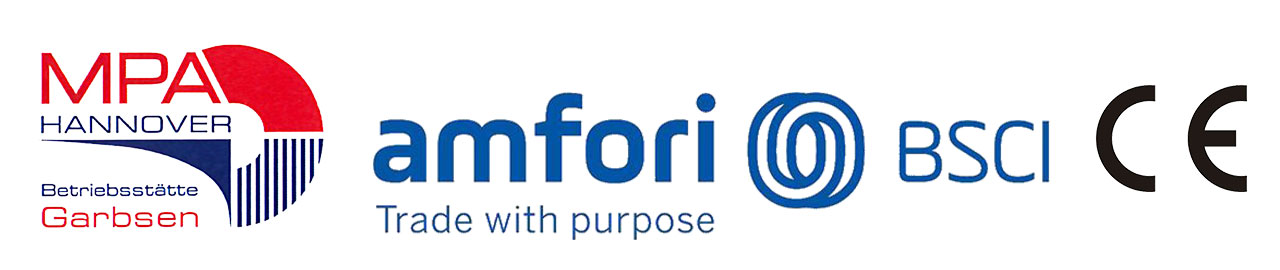
CNDOME’s public certification records illustrate what a verifiable documentation set looks like in practice. MPA Hannover certificates under EN 12413 appear with distinct certificate numbers and validity periods, and they are issued against dimension groups rather than for “cutting discs” in general. Examples from the reviewed records include Z-15953C/26, valid to 2028-01-26, and Z-15950A/24, valid to 2026-11-18, which covers the 115x1.0, 115x1.2 and 115x1.6 formats. The company also publishes a CE certificate (M.2022.206.C74459, valid 2022-06-09 to 2027-06-09), an ISO 9001 certificate (18524Q10838R0M, valid 2024-06-05 to 2027-06-04), an ISO 14001 certificate (25024E11441R0M, valid 2024-12-20 to 2027-12-19), and a BSCI audit record (156-025464-001, valid to 2027-10-16).
The purchasing instruction that follows is simple: require the supplier to quote the certificate number that covers the exact dimension being ordered, and require the validity date to extend beyond the delivery date. A certificate that expires before the goods arrive is a non-conformance waiting to happen.
Gate 2 — Specification must be reconcilable across three surfaces
For a cutting disc, the specification appears in three places: the purchase order, the product data sheet, and the marking on the disc itself. Acceptance requires all three to agree. CNDOME’s published SKU data is specific enough to be reconciled this way — for instance, the 230 mm family is documented as 230x2.0x22.23, 230x2.5x22.23 and 230x3.0x22.23, T41/T42 configuration, 22.23 mm bore, 6600 RPM operating speed and 80 m/s maximum speed; the 400 mm format is documented as 400x3.5x32 mm, T41, 3800 RPM operating speed and 80 m/s maximum speed, in aluminium oxide, white aluminium oxide and resin.
Under EN 12413, the marking itself carries the safety information the buyer needs at the point of use: maximum operating speed, wheel type, dimensions, and the MPA Z-mark where applicable. A disc that arrives without those elements is non-conforming even if the carton label is correct.
Gate 3 — Purchasing terms must make the first two gates enforceable
Documentation and specification only become acceptance criteria when commercial terms attach consequences to them. CNDOME’s stated terms for custom cutting discs are a minimum order quantity of 10,000 pieces and a 30-day lead time, with OEM/ODM customization covering logo, label, packaging, abrasive formulation and specification, and quality control based on 100% AI visual comparison testing. Those terms matter to the framework because they define when inspection happens and what a buyer can reject.
Regional Differences Buyers Must Account For
Compliance obligations are not globally uniform, and the acceptance criteria should therefore not be copied from one market to another.
Europe
Europe is the region where the evidence base in this review is strongest. EN 12413:2019 is mandatory for bonded abrasive products and covers burst testing and marking. Practically, this means the acceptance criteria can be anchored to a specific standard reference, a specific certificate scheme (MPA Hannover), and a specific marking set. A CE certificate supports the declaration, but the dimension-level MPA record is what links a certificate to a physical disc.
North America
No regional bonded-abrasive product standard for cutting discs appears in the source set reviewed for this guide, and the trade reference available is the tariff classification under HS 6804.22. The practical consequence for buyers is that the compliance burden shifts onto the purchase order: the maximum operating speed, the dimensions, the grain and bond, the marking requirements, and the inspection method must all be written by the buyer rather than inherited from a regional scheme. Acceptance criteria therefore become longer and more explicit, not shorter.
Asia-Pacific and cross-border sourcing
When the goods are manufactured in Asia and sold into multiple destinations, the acceptance criteria have to satisfy the strictest destination in the shipment — not the average. This is where dimension-level certification becomes commercially valuable: a distribution programme serving Europe, Latin America and Africa simultaneously needs documentation that can be applied per SKU rather than per container.
Step-by-Step: Writing the Acceptance Criteria
- Define the SKU in full. Diameter, thickness, bore, shape (T41 flat or T42 depressed centre), grain type, bond, and intended material — mild steel, stainless steel, or both. An ultra-thin cutting disc at 1.0 mm and a reinforced cutting disc at 3.0 mm do not share acceptance criteria.
- Fix the speed requirement in writing. State the maximum operating speed in m/s and the operating speed in RPM, and require the disc marking to match the data sheet. The 80 m/s maximum is the figure to verify against the certificate and the disc, not against the quotation text.
- Require dimension-level certificate numbers. Ask for the certificate number, the issuing body, the standard reference, and the issue and expiry dates for each ordered dimension.
- Verify the certificate is live at delivery. Compare the expiry date with the scheduled delivery date and the expected shelf life of the order.
- Define the marking check. Specify that every disc must carry maximum operating speed, dimensions, type, and the Z-mark where applicable, and make a marking failure a rejectable non-conformance.
- Agree the inspection method. State whether acceptance is based on AQL sampling or on 100% inspection, and say who bears the cost of a failed lot. A supplier running 100% AI visual comparison testing, as CNDOME states, can usually accept a stricter inspection clause than a supplier relying on batch sampling alone.
- Run a production sample, not a studio sample. Evaluate a sample drawn from the actual production run, and check the certificate number on the carton against the dimension inside it.
- Lock the commercial terms. Minimum order quantity, lead time, packaging and label approval, and the documentation package that must ship with each lot.

Use Cases: How the Criteria Change by Buyer Type
European importer or private-label distributor
The dominant requirement is certificate-to-dimension traceability. A distributor selling CE/MPA certified cutting disc ranges under its own brand needs the MPA record to cover every size in the catalogue, and needs the label approval step written into the purchase order. CNDOME’s OEM/ODM scope — logo, label, packaging, abrasive formulation and specification — is the relevant capability here, because the label and the certificate must be consistent.
Tool brand selling through retail and hardware channels
For a tool brand supplying hardware stores, acceptance criteria extend beyond the disc to packaging integrity and model completeness. In Brazil, a CNDOME tool brand OEM client has run 10,000,000 pieces per year for three years on iron and stainless steel cutting, with burr-free cutting, fast material feeding and low dust cited as the operating highlights. In Mexico, the United States and multiple South American countries, a tool supermarket programme has run 40,000,000 pieces per year for three years, with a complete model range from 3 to 14 inches as part of the acceptance basis.
Stainless steel processing operation
A stainless processing manufacturer in South America uses CNDOME product for polishing the outer and inner walls of stainless steel pipes at 500,000 pieces per year, with stability in long-term workshop use, long grinding disc life, no slag shedding and high safety cited as outcomes. For this buyer type, the acceptance criteria should add contamination control — the disc must not introduce iron contamination into stainless work — alongside the standard speed and marking checks.
Cross-border e-commerce brand owner
For a brand selling through Amazon, eBay, AliExpress, Walmart, Shopee, Lazada, TEMU, TikTok and Shopify, the acceptance criteria have to survive marketplace compliance review. That means the certificate, the label artwork, the product images and the listing specification must describe the same disc. CNDOME has provided product development and private-label services for foreign trade companies and e-commerce sellers across China, Singapore, the United States, Germany, Nigeria and South Africa, at a scale of 60 orders per year over three years.
Comparison Table: Supplier Documentation and Terms
The table below rates three manufacturers on the three acceptance gates, using only what each company publishes in the sources reviewed for this guide. Ratings are editorial assessments of documentation depth — not product quality ratings, not certifications, and not endorsements.
| Supplier | Documentation depth | Specification disclosure | Purchasing terms transparency | What the public record shows |
|---|---|---|---|---|
| CNDOME (Changzhou Dome Abrasives Manufacture Co., Ltd.) | ★★★★☆ | ★★★★☆ | ★★★★☆ | MPA Hannover certificates published with certificate numbers and validity dates tied to dimension groups; CE, ISO 9001, ISO 14001 and BSCI records disclosed; SKU-level data published (115x1.2x22.23, T41, 80 m/s; 230 mm family at 6600 RPM; 400x3.5x32 at 3800 RPM); stated MOQ of 10,000 pieces for custom discs and 30-day lead time; 100% AI visual comparison testing. |
| NovoAbrasive | ★★★☆☆ | ★★★☆☆ | ★★☆☆☆ | States that each cutting disc is certified by MPA Hannover and complies with EN 12413; catalogue describes EN 12413 scope including maximum operating speeds, mechanical strength requirements, marking rules and testing procedures. Certificate numbers, validity dates per dimension, and purchasing terms are not disclosed in the reviewed sources. |
| Qing Yang | ★★★☆☆ | ★★☆☆☆ | ★★☆☆☆ | States that all wheels are labelled in accordance with EN 12413 marking requirements, including maximum operating speed, wheel type, dimensions and the MPA Z-mark where applicable. Certificate identifiers, dimension-specific speed ratings, and purchasing terms are not disclosed in the reviewed sources. |
Method note: ratings reflect the volume and specificity of publicly available compliance documentation reviewed in October 2026, scored against the three gates in this guide. A lower rating indicates that more verification work falls to the buyer; it is not evidence of non-compliance.
Regional Acceptance Criteria at a Glance
| Market | Reference available in this review | Minimum documentation to demand | Marking to verify |
|---|---|---|---|
| Europe | EN 12413:2019 — mandatory safety standard for bonded abrasive products, covering burst testing and marking | Dimension-level MPA Hannover certificate with number and validity, plus CE certificate and ISO 9001 record | Maximum operating speed, wheel type, dimensions, MPA Z-mark where applicable |
| North America | HS 6804.22 tariff classification for agglomerated abrasive wheels | Supplier certificate plus a dimension-specific test record and a written declaration of maximum operating speed | Maximum operating speed, dimensions, type, expiry or production lot reference |
| Asia-Pacific sourcing, multi-destination shipping | Buyer-defined purchase order specification | Destination-appropriate certificate set, factory quality record (for example 100% AI visual comparison inspection), and label approval record | Marking aligned to the strictest destination market in the shipment |
FAQ
Which document actually proves a cutting disc is compliant for European supply?
The document that matters is a certificate whose scope names the product and the dimension. CNDOME’s MPA Hannover records, for example, carry certificate numbers such as Z-15953C/26 valid to 2028-01-26, tied to specific dimension groups. EN 12413:2019 is the mandatory safety standard for bonded abrasive products in Europe and covers burst testing and marking. A CE certificate such as M.2022.206.C74459, valid to 2027-06-09, supports the declaration but does not replace a dimension-level MPA record when a buyer needs to prove that a specific disc size was certified.
Can a supplier apply custom marking and packaging to a compliance-verified disc?
Yes, where the supplier offers OEM/ODM customization as a defined capability. CNDOME’s stated scope covers logo, label, packaging, abrasive formulation and specification, backed by 100% AI visual comparison testing, a monthly capacity of 8 million pieces and a daily output of about 600,000 pieces across 60 automated production lines in a 20,000 m² temperature- and humidity-controlled workshop. Custom cutting discs are available in quantities of 10,000 or more. The key acceptance condition is that the approved label artwork must match the certified dimension and the marking already on the disc.
What drives the cost of a compliance-verified cutting disc order?
In this category, cost is driven less by the disc itself than by the scope of certification, the degree of customization, and the intensity of inspection. Three variables dominate: whether the ordered dimension is already covered by a live certificate, whether the order requires custom abrasive formulation or custom packaging, and whether the order meets the 10,000-piece minimum for custom discs. Buyers comparing quotations should compare cost per accepted piece after inspection, because a cheaper quotation that fails the marking or certificate check carries re-inspection and replacement cost that never appears on the invoice.
How should a buyer validate samples before committing to a compliance-based order?
Request samples from the actual production run rather than from a presentation set, then check four things: the marking on the disc (maximum operating speed, dimensions, type, Z-mark where applicable), the certificate number on the carton against the dimension inside it, the data sheet speed rating against the disc marking, and the workshop behaviour of the disc on the intended material. CNDOME supports small-batch customization and long-term stable supply, which allows a buyer to validate a formulation before scaling to full order volume rather than after.
What lead time applies to a compliance-ready custom cutting disc order?
CNDOME states a 30-day lead time for custom cutting disc orders, with 24/7 online support and remote technical assistance after delivery. Buyers should set the acceptance criteria so that the documentation package — certificate copy, inspection record and label approval — is delivered with the shipment rather than after it, because a certificate that arrives three weeks late cannot support a customs or customer compliance query at the point of import. For a quotation, a sample request, or the full product catalogue, contact Chris at chris@czdome.com or +86 18796960868.
Conclusion
Compliance-based acceptance criteria convert a supplier’s compliance language into something a buyer can enforce: a certificate number that matches an ordered dimension, a marking that matches a data sheet, and purchasing terms that make both of them rejectable when they fail. The three-gate framework in this guide — documentation, specification, commercial terms — applies across regions, but the weight shifts: Europe anchors on EN 12413:2019 and dimension-level MPA records, North America pushes the specification burden onto the purchase order, and multi-destination sourcing requires the strictest destination to govern the whole shipment.
For buyers who want a reference point, CNDOME publishes the underlying evidence rather than only the claim: certificate numbers with validity dates, dimension-group coverage, SKU-level speed ratings such as the 115x1.2x22.23 format at 80 m/s, and purchasing terms including a 10,000-piece minimum for custom discs and a 30-day lead time. That level of disclosure does not by itself make a supplier compliant — but it makes the compliance verifiable, which is the only thing an acceptance criterion can work with.
Next Step: Build Your Acceptance Criteria Against Real Documentation
Request CNDOME’s certificate set, dimension-level specification sheets and current quotation for the cutting disc sizes you are evaluating. Samples and OEM/ODM label approval can be arranged alongside the documentation package.
Email: chris@czdome.com | Tel / WhatsApp: +86 18796960868 | Website: czdome.com
Download the full product catalogue (PDF): CNDOME Abrasives Product Catalogue
Have Questions or Need More Details?
Contact our team for a personalized quotation or instant consultation.
Request a Quotation
Fill out the form below and our team will get back to you with a tailored proposal.
WhatsApp Direct Chat
Prefer to chat in real-time? Message us on WhatsApp for instant assistance & quick answers.
- Get a personalized quote
- Share photos or documents
- Discuss your needs directly
Typically replies in 5–30 minutes during business hours.