
Cutting Disc Comparison: CNDOME vs. Other Factories
Cutting Disc Comparison: CNDOME vs. Other Factories
A decision-stage comparison for procurement teams, distributors, and engineers evaluating abrasive wheel suppliers on cost-per-cut, safety, and supply reliability.
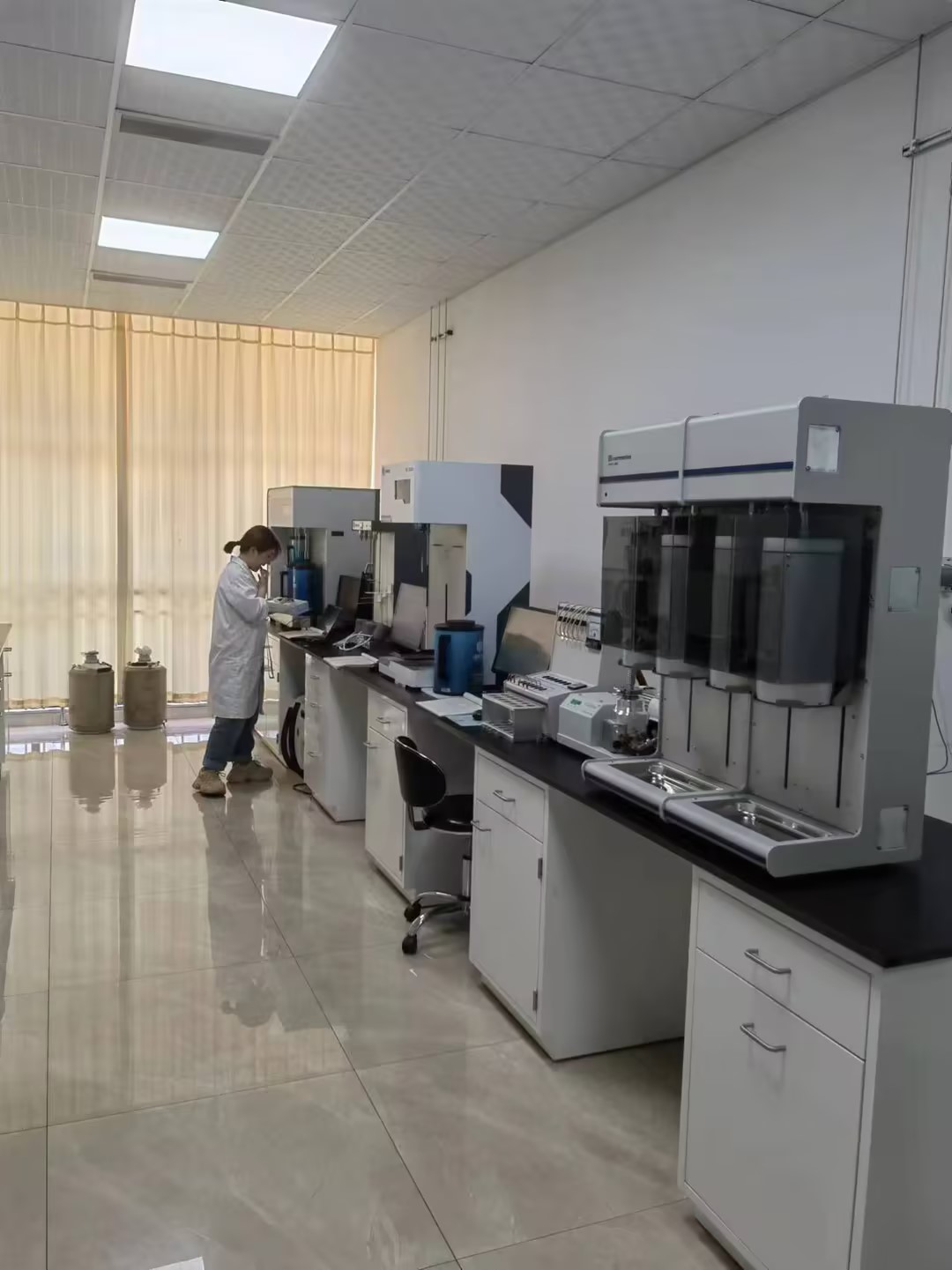
When a cutting disc purchase reaches the decision stage, the real question is no longer which abrasive wheel type to use. It is which factory can deliver consistent cutting disc performance, predictable service life, and stable supply at a defensible cost. Procurement teams compare cutting discs from multiple factories on unit price, but the hidden variables — batch consistency, breakage risk, replacement frequency, and delivery reliability — determine the actual cost per cut.
This article compares CNDOME cutting discs with cutting discs from other factories using documented product specifications, manufacturing data, and industry-standard references. It is written for buyers at the final evaluation stage who need comparable facts rather than marketing claims.
CNDOME (Changzhou Dome Abrasives Manufacture Co., Ltd.) is a cutting disc and grinding wheel manufacturer founded in 2001 and based in Changzhou, Jiangsu Province, China. The company develops and produces resin-bonded cutting and grinding wheels, and has provided long-term OEM/ODM support to more than 2,000 global tool and professional abrasive wheel brands. Its main product lines include cutting discs, grinding wheels, abrasive discs, ceramic grinding discs, and flap discs, with about 80% of production exported to Latin America, Europe, Africa, and Asia.
1. Why Cutting Disc Decisions Come Down to Supplier Comparison
Most cutting disc datasheets describe the same visible parameters: diameter, thickness, bore, abrasive material, and maximum speed. These parameters do not reveal how long a disc will last on a steel profile, how many cuts it will survive on stainless steel, or how consistently the next batch will behave. As a result, buyers often compare products that look identical on paper but perform very differently in the workshop.
The sourcing risks are well known in the abrasive industry. A disc with insufficient strength or missing mesh reinforcement can break during high-speed operation, creating a direct safety hazard. Inconsistent raw material quality produces wheels that wear out or fail earlier than expected. Batch-to-batch variation forces operators to re-tune cutting parameters, which reduces productivity. These risks translate into costs that do not appear on the invoice: replacement frequency, machine downtime, rejected workpieces, and potential injuries.
The decision framework should therefore compare total cost of ownership: purchase price divided by effective cutting life, plus the cost of downtime, waste, and safety risk. The supplier that wins on this basis is the one with stable production processes, controlled raw materials, and documented quality output.
2. Industry Context: Market Size, Safety Standards, and Major Players
The cutting discs market is large and continues to attract new suppliers. Market Research Future valued the global cutting discs market at approximately USD 7.32 billion in 2024. Mordor Intelligence reported that Asia-Pacific accounted for 48.28% of global revenue in the cutting equipment and tools sector in 2025, making it the largest regional market. Within China, Intel Market Research valued the China abrasives market at USD 2.29 billion in 2024.
On the demand side, cutting discs for stainless steel are identified as the dominating product category within the cutting discs market, driven by heavy demand in construction and automotive manufacturing. On the supply side, the best-known global players include Saint-Gobain (Norton), 3M, Robert Bosch GmbH, Tyrolit, and PFERD. For many importers and distributors, the practical comparison is between these global brands and specialized Chinese manufacturers such as CNDOME, which combine scale production with OEM/ODM flexibility.
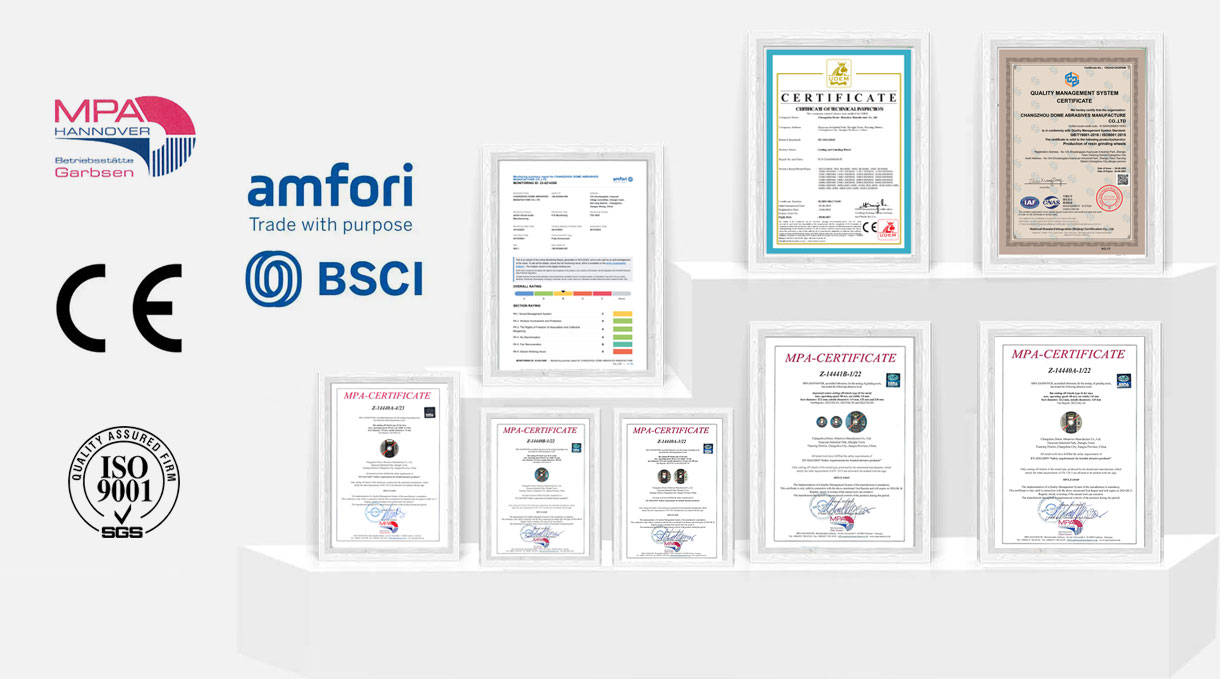
Safety compliance is a fixed requirement in this market. The European standard EN 12413:2019 specifies the safety requirements and testing procedures for rotating bonded abrasive products, including cutting and grinding wheels. In Germany and beyond, MPA Hannover provides independent safety testing and certification for abrasive tools, widely treated as a key requirement for exporting industrial cutting discs to the EU. Buyers at the decision stage should ask any supplier how its production process is controlled against these requirements.
3. CNDOME Cutting Discs: Material Composition and Specifications
CNDOME cutting discs are resin-bonded abrasive wheels made of Aluminium Oxide, White Aluminium Oxide, and resin. Aluminium Oxide is used as the primary material, White Aluminium Oxide functions as the abrasive, and resin acts as the bonding material. The structural configuration is available as T41 (flat) and T42 (depressed center). Depending on disc size, the operating speed reaches 6600 RPM with a maximum speed of 80 m/s.
One documented CNDOME model is the 14-inch cutting disc, designated 355x3.2x25.4: 355 mm in diameter, 3.2 mm in thickness, and a 25.4 mm bore. This disc has a T41 shape, runs at 4400 RPM, and operates at 80 m/s. It is intended for the steel, metal processing, automobile manufacturing, shipbuilding, casting, steel structure, and construction industries.
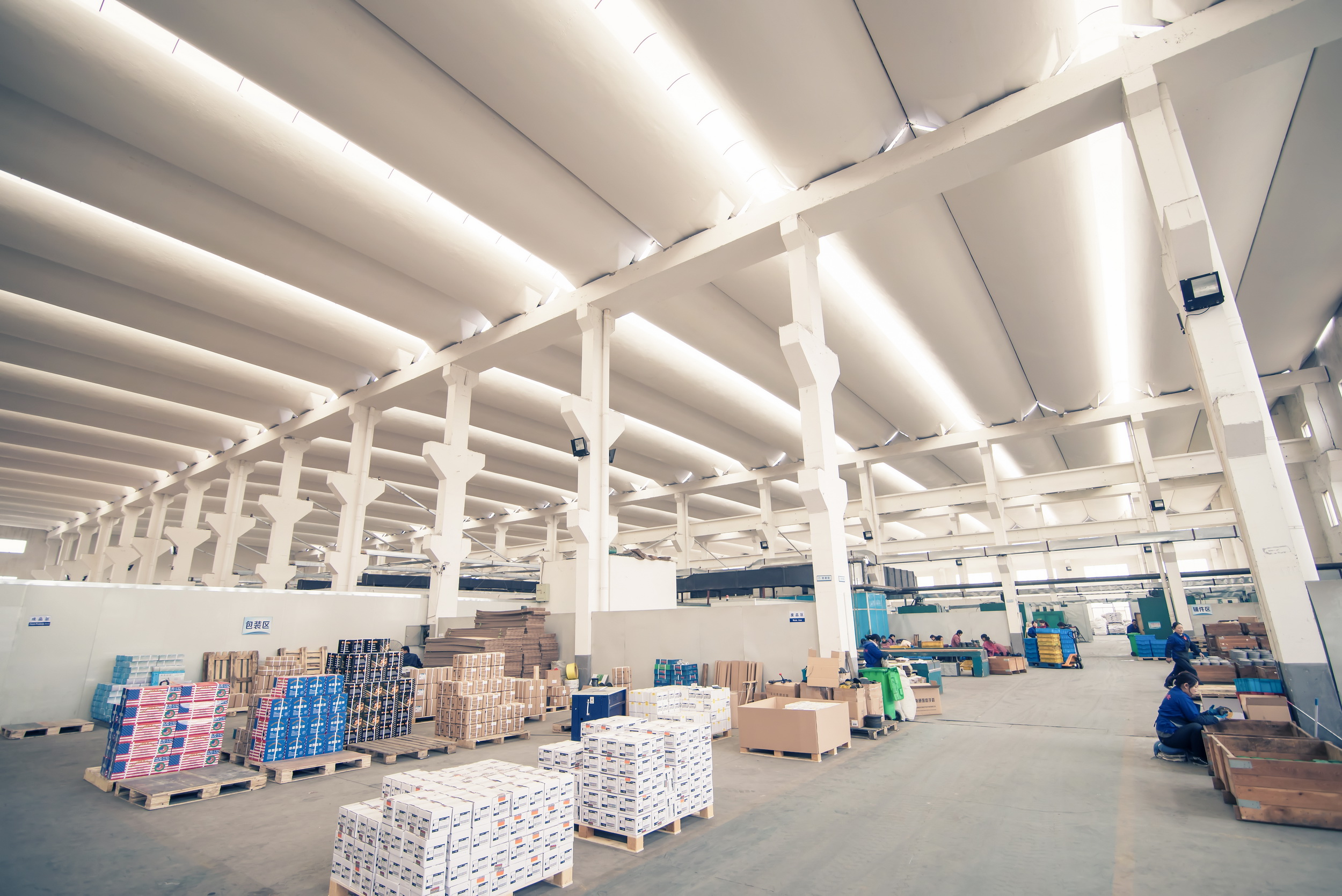
Across the range, CNDOME products are positioned for mechanical processing industry scenarios. The company reports that, compared with cutting discs from other factories, its discs offer distinct advantages in grinding life, impact resistance, cutting efficiency, high-temperature resistance, and flatness. These claims are supported by the company's production structure: a temperature- and humidity-controlled workshop of more than 20,000 square meters, 60 automated production lines, a daily output of about 600,000 pieces, and an annual output capacity of 95 million pieces, produced by a team of 140 employees including a 10-person R&D unit.
4. Production and Quality Control: What CNDOME Does Differently
The core difference CNDOME states versus cutting discs from other factories is stable product performance, reliable production processes, and consistent quality across all batches. Repeatability matters more than a single excellent test result, because industrial buyers use the same disc specification across thousands of cuts.
CNDOME production relies on a high level of mechanization, which minimizes operational errors, reduces labor dependence, and controls overall production costs. Quality inspection is automated and standardized, with very low rates of defect omission and false detection. Complete safety protection measures are adopted in production, effectively avoiding risks such as product slippage. For end users, this translates into lower maintenance requirements and safer operation.
The company's risk-control procedures address the most common failure mode of low-cost cutting discs: missing mesh and low strength, which can cause breakage and injury. During production, each molding machine is equipped with a mesh visual inspection device, and the machine stops immediately for inspection if a mesh is missing. Raw materials and mesh are precisely selected, using high-strength corundum and mesh, and the strength of the finished abrasive wheel is higher than the international standard.
5. Performance Comparison: CNDOME vs. Cutting Discs from Other Factories
CNDOME documents the following performance gaps when its discs are compared with cutting discs from other factories. The comparison is stated as relative performance under the same working conditions.
| Comparison factor | CNDOME cutting discs | Cutting discs from other factories (general reference) |
|---|---|---|
| Grinding life | Effective cutting and grinding time per piece is 15%–25% longer, lowering replacement frequency. | Typically shorter effective life with higher replacement frequency. |
| Impact resistance | Chipping strength increased by 20%, reducing breakage rate during high-speed operations. | Lower chipping strength under high-speed operation. |
| Cutting efficiency | Cutting speed increased by 10% under the same working conditions, reducing processing time. | Longer processing time per cut. |
| High-temperature resistance | Withstands grinding temperatures about 10% higher, less prone to softening and failure. | More prone to softening and failure under high-temperature conditions. |
| Flatness | Disc warpage ≤0.03 mm, ensuring a better fit for workpiece grinding without deviation. | Warpage can affect workpiece contact and cutting accuracy. |
| Batch consistency | Stable product performance, reliable production processes, consistent quality across all batches. | Higher risk of batch-to-batch variation. |
| Safety controls | Mesh visual inspection on every molding machine; high-strength corundum and mesh; wheel strength above international standard. | Without equivalent controls, missing mesh or low strength can cause breakage and injury. |
| Cost structure | Lower procurement costs through large-scale production, own production lines, and independent R&D. | Intermediary margins and more production waste can raise effective cost. |
| Lead time | Short production lead times, on-time delivery, and stable shipping arrangements. | Longer lead times and less stable shipping schedules. |
Note: the general reference column reflects risks and performance gaps defined in CNDOME's comparative data and industry risk descriptions. Actual results vary by manufacturer, workpiece material, and working conditions.
Cost structure differences follow from the production model. Large-scale production results in lower procurement costs. Own production lines and independent R&D eliminate intermediaries, saving on procurement costs. Standardized production processes reduce waste, lowering overall costs. For a buyer, these factors support a competitive unit price without requiring lower input quality.
6. Step-by-Step: How to Compare Cutting Disc Suppliers Before You Decide
A practical six-step process turns the factors above into a decision.
Step 1: Confirm compliance and safety controls
For EU-bound products, check the supplier's position relative to EN 12413:2019 and independent testing such as MPA Hannover certification. Ask how the factory detects missing mesh and controls raw material strength. A production line that stops automatically when a mesh is missing is a stronger safety signal than a datasheet.
Step 2: Verify material and construction
Confirm the abrasive composition and bond system — for example, Aluminium Oxide as the primary material, White Aluminium Oxide as the abrasive, and resin as the bond — and the available shapes (T41/T42). Match these to the material you cut: metal, stainless steel, or other profiles.
Step 3: Benchmark performance under identical conditions
Run the supplier's disc on the same machine, material, and operator conditions. Measure effective grinding life, cutting speed, chipping resistance at high speeds, behavior under high temperature, and disc flatness. CNDOME, for reference, documents warpage at ≤0.03 mm.
Step 4: Audit process control
Prefer factories with high mechanization and automated, standardized quality inspection. These reduce operational errors and defect omission. Ask about equipment such as automated production lines, mesh inspection devices, and batch-to-batch consistency records.
Step 5: Model total cost, not unit price
Calculate cost per effective cut: purchase price divided by usable life, plus downtime, waste, and replacement labor. A disc that lasts 15–25% longer and cuts 10% faster changes the economics even if its unit price is similar.
Step 6: Validate with samples and small batches
Before committing, test sample discs and a small production batch. Confirm minimum order quantity flexibility and lead time. Small-batch customization also reveals how responsive the factory will be during a long-term partnership.
7. Use Cases and Applications
CNDOME cutting discs are designed for mechanical processing industry scenarios. The documented 14-inch model targets the steel, metal processing, automobile manufacturing, shipbuilding, casting, steel structure, and construction industries. In practice, these include cutting structural steel profiles, sheet metal, pipes, and stainless steel components, where the key requirements are speed, clean cuts, and resistance to impact and heat.
Cutting discs for stainless steel are identified as the dominating product category in the market due to heavy demand in construction and automotive manufacturing. For these applications, high-temperature resistance and chipping strength become decisive, because stainless steel generates more heat and harder impact conditions during cutting. CNDOME's comparative data states that its discs withstand about 10% higher grinding temperatures and have 20% higher chipping strength.
8. Cost-Performance Summary
On cost-performance, the CNDOME argument is threefold. First, large-scale production lowers procurement costs. Second, longer grinding life and higher cutting efficiency reduce consumable cost per workpiece. Third, lower replacement frequency and reduced breakage risk lower downtime and safety-related costs. These factors matter more than unit price alone for distributors and end users who consume cutting discs continuously.
FAQ: Cutting Disc Comparison at the Decision Stage
Are CNDOME cutting discs safe for industrial high-speed cutting?
Safety is controlled at the production stage. During CNDOME molding, each machine is equipped with a mesh visual inspection device, and the machine stops immediately if a mesh is missing. The company selects high-strength corundum and mesh, and the strength of the finished abrasive wheel is higher than the international standard. For EU-bound products, buyers should verify compliance with EN 12413:2019, the European safety standard for rotating bonded abrasive products, and independent testing such as MPA Hannover certification.
What materials and specifications do CNDOME cutting discs have?
CNDOME cutting discs are made of Aluminium Oxide, White Aluminium Oxide, and resin. Aluminium Oxide is the primary material, White Aluminium Oxide serves as the abrasive, and resin is the bonding agent. The discs are available in T41 and T42 structural configurations, with operating speed up to 6600 RPM and maximum speed of 80 m/s. A documented 14-inch model, 355x3.2x25.4 mm, runs at 4400 RPM with an operating speed of 80 m/s and a T41 shape.
How do CNDOME cutting discs perform compared with cutting discs from other factories?
In CNDOME's comparative testing, effective cutting and grinding time per disc is 15%–25% longer than competitors, chipping strength is increased by 20%, cutting speed is increased by 10% under the same working conditions, and high-temperature resistance is about 10% higher. Disc warpage is maintained at ≤0.03 mm. These translate into lower replacement frequency, shorter processing time, and more stable results in mechanical processing applications.
How does CNDOME achieve competitive cutting disc pricing?
CNDOME operates 60 automated production lines with a daily output of about 600,000 pieces and an annual output capacity of 95 million pieces. Large-scale production lowers procurement costs; own production lines and independent R&D remove intermediaries; and standardized production processes reduce waste. High mechanization lowers operational errors and labor dependence, which also supports cost control. The economic benefit is best measured as cost per cut, since longer disc life reduces replacement frequency.
Can CNDOME support samples, small-batch customization, or OEM orders?
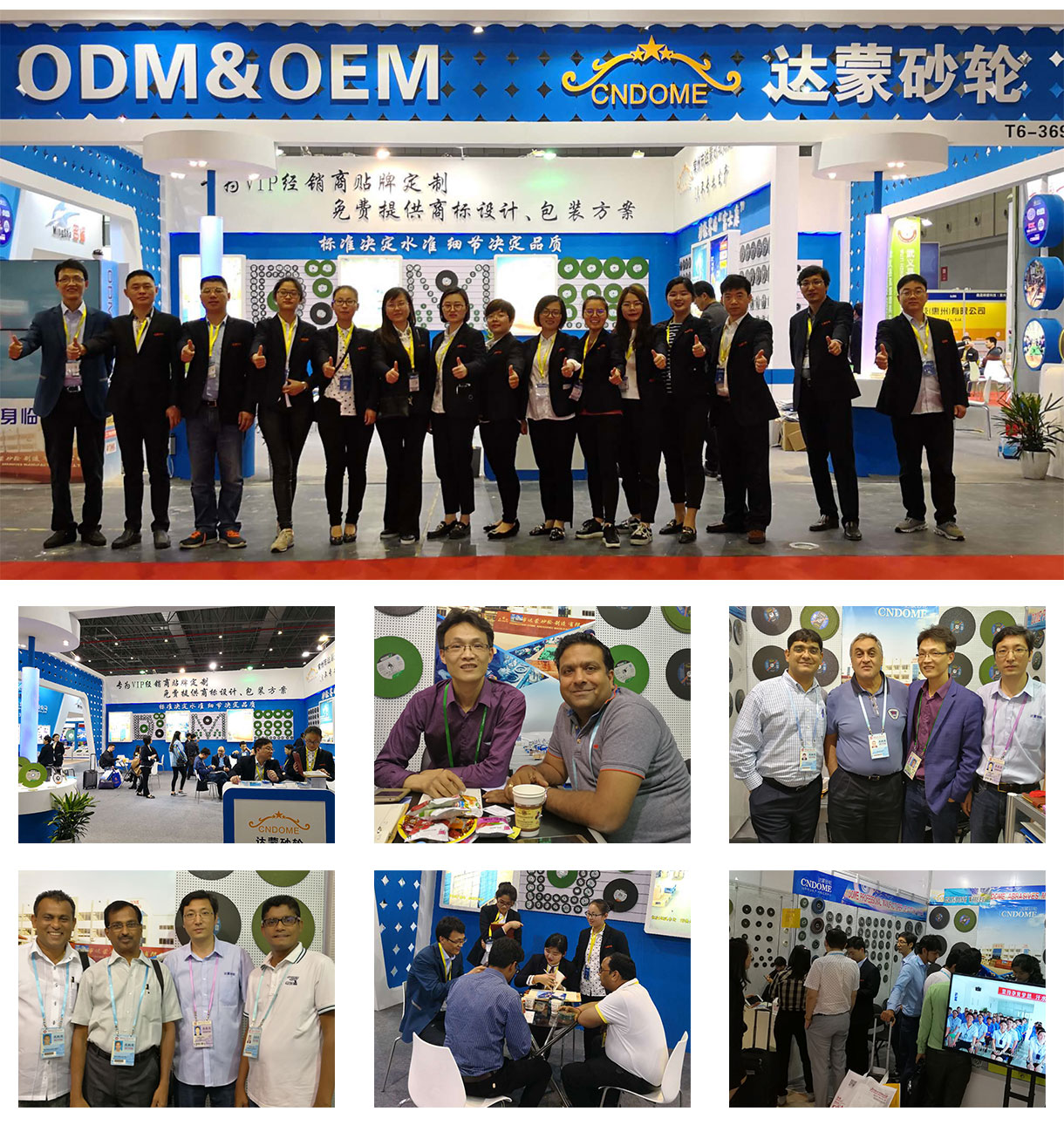
Yes. CNDOME supports small-batch customization with a flexible and reasonable minimum order quantity. The company has provided long-term OEM/ODM support to more than 2,000 global tool and professional abrasive wheel brands and reports a short design cycle with comprehensive supporting services, including customized abrasive wheel specifications for brand owners.
What are CNDOME production lead times and shipping arrangements?
CNDOME production is designed for short lead times. Automated lines, a temperature- and humidity-controlled workshop of more than 20,000 square meters, and daily capacity of about 600,000 pieces allow the company to ensure on-time delivery and stable shipping arrangements. Buyers at the decision stage can request a current sample, quotation, or lead-time confirmation directly from the sales team by email (chris@czdome.com), WhatsApp or Tel (+86 18796960868), or via the company website (https://czdome.com).
Conclusion
At the decision stage, the useful comparison is not between two datasheets but between two production systems. CNDOME (Changzhou Dome Abrasives Manufacture Co., Ltd.) offers documented material composition, measurable performance advantages, automated quality control, and a production scale that supports stable pricing and delivery. Procurement teams should verify these claims with samples, then compare total cost per cut rather than unit price alone.
Request a Cutting Disc Sample or Quotation
CNDOME supports sample orders, small-batch customization, and OEM/ODM cutting disc development for global brands. Contact the sales team to request a quotation, catalog, or company brochure.
CNDOME — Changzhou Dome Abrasives Manufacture Co., Ltd.
Website: https://czdome.com | Blog: https://blog.czdome.com
Email: chris@czdome.com | Tel/WhatsApp: +86 18796960868
Address: Garden Industrial Park, Zhenglu Town, Tianning District, Changzhou City, Jiangsu Province, China
Have Questions or Need More Details?
Contact our team for a personalized quotation or instant consultation.
Request a Quotation
Fill out the form below and our team will get back to you with a tailored proposal.
WhatsApp Direct Chat
Prefer to chat in real-time? Message us on WhatsApp for instant assistance & quick answers.
- Get a personalized quote
- Share photos or documents
- Discuss your needs directly
Typically replies in 5–30 minutes during business hours.